Nyungwe Canopy Walk: Everything You Need to Know Before You Go in 2026–2027
October 21, 2026Clementine
Why Visit Nyungwe Forest National Park in 2026–2027?
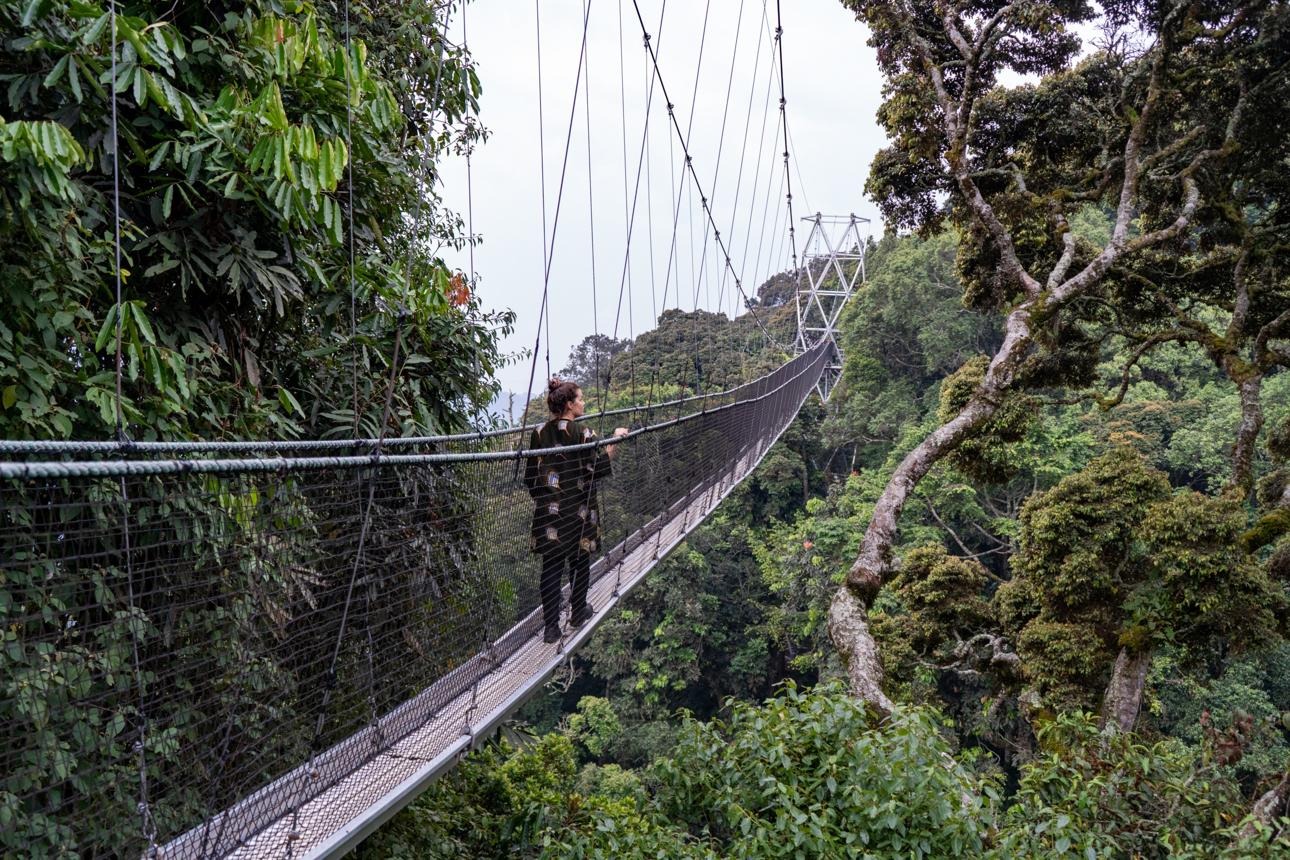
Imagine standing on a suspended bridge high above an ancient rainforest, watching clouds drift across green mountain ridges while birds call from the treetops below. Around you, layers of forest stretch into the distance, hiding chimpanzees, colourful birds, monkeys, and countless other forms of life.
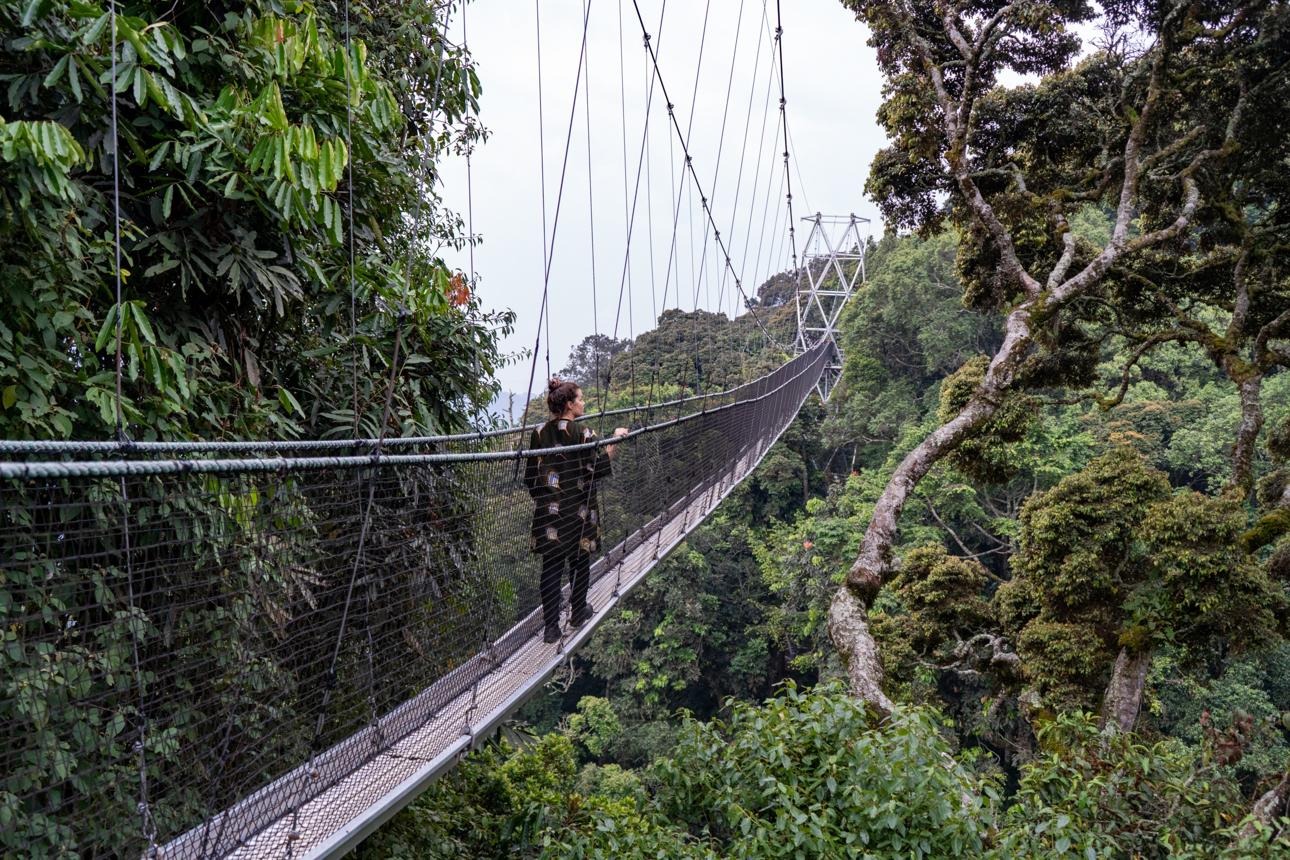
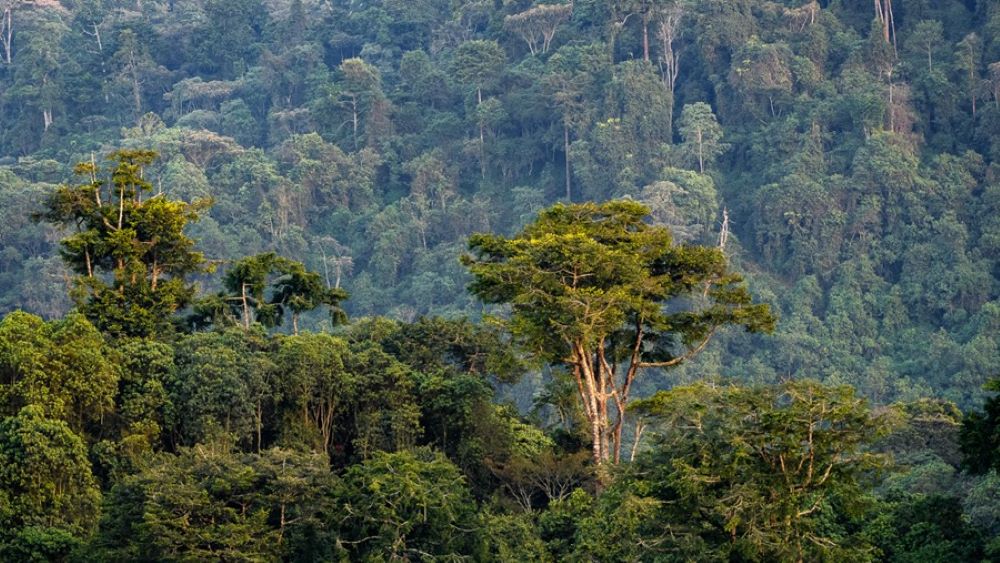
Located in southwestern Rwanda, Nyungwe Forest National Park is one of Africa’s oldest rainforests and the largest remaining tract of natural forest in Rwanda. It protects an extraordinary range of habitats, including dense montane forest, bamboo-covered slopes, wetlands, and high-altitude grasslands. The park became a UNESCO World Heritage Site in 2023, recognising its outstanding biodiversity and global conservation importance.
However, Nyungwe is not simply a destination for scientists and serious hikers. It is a place where travellers can turn a holiday into an unforgettable adventure.
You can walk high above the forest canopy, follow experienced trackers in search of wild chimpanzees, hike through mist-covered vegetation towards waterfalls, fly along an exciting zipline, and discover some of the Albertine Rift's remarkable birdlife.
For travellers planning a Rwanda holiday in 2026–2027, Nyungwe offers something especially valuable: an opportunity to discover a different side of Africa, beyond the famous savannah landscapes and traditional wildlife safaris.
At Seek Wild Africa, we help travellers turn these experiences into carefully planned journeys, arranging transport, accommodation, activities, and practical travel support so that visitors can explore Rwanda with greater confidence.
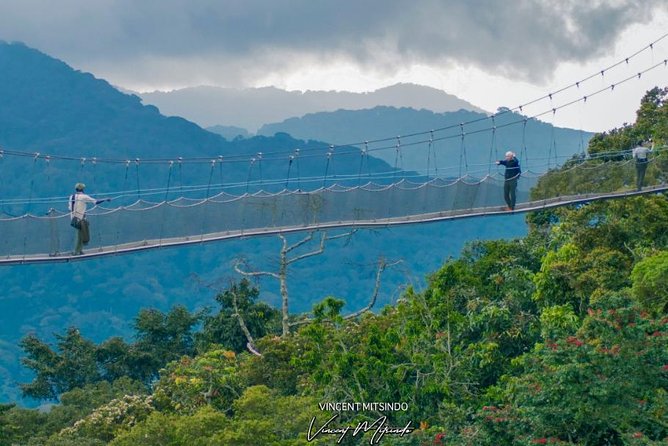
[Image placement: A panoramic photograph of the Nyungwe Canopy Walkway suspended above the rainforest, with misty green mountains in the background.]
What Makes Nyungwe Canopy Walk So Special?
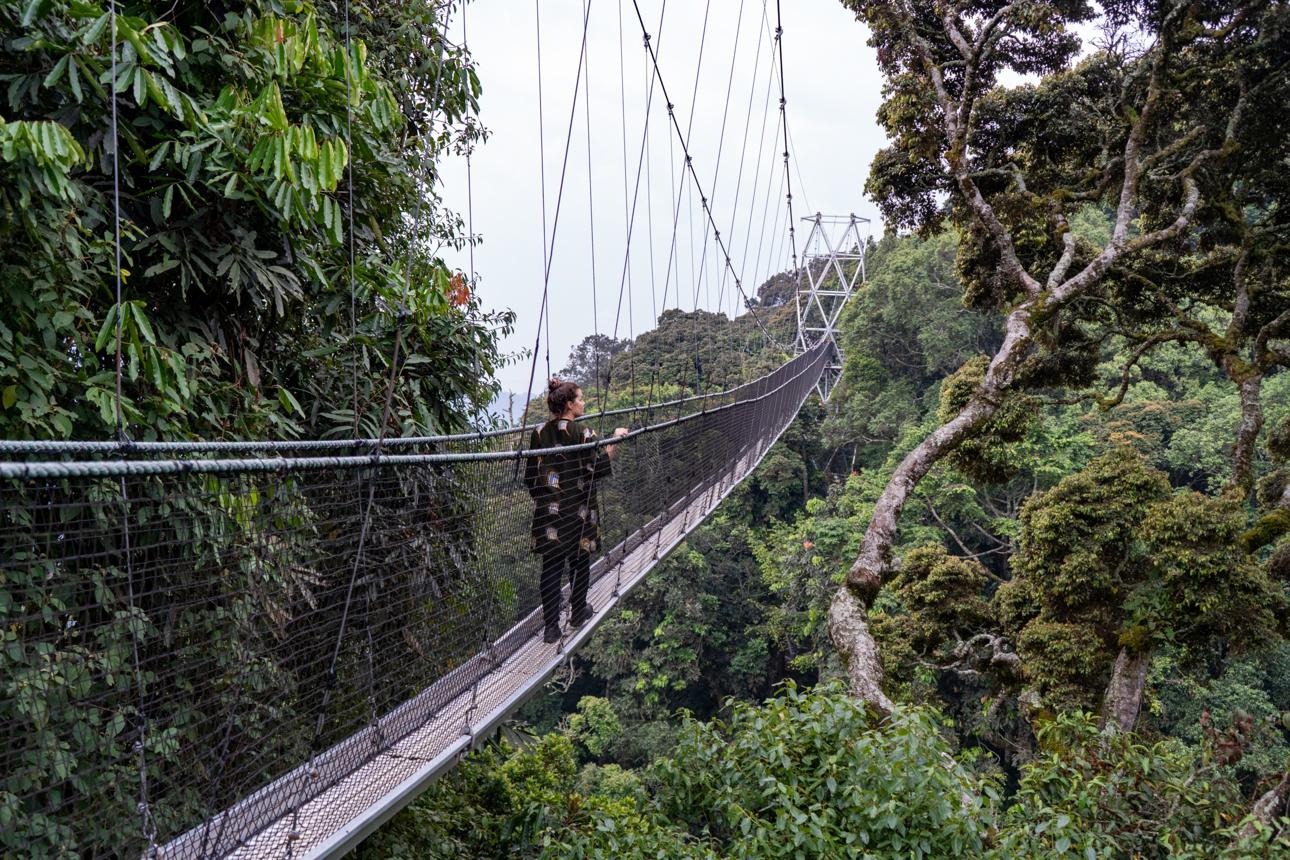
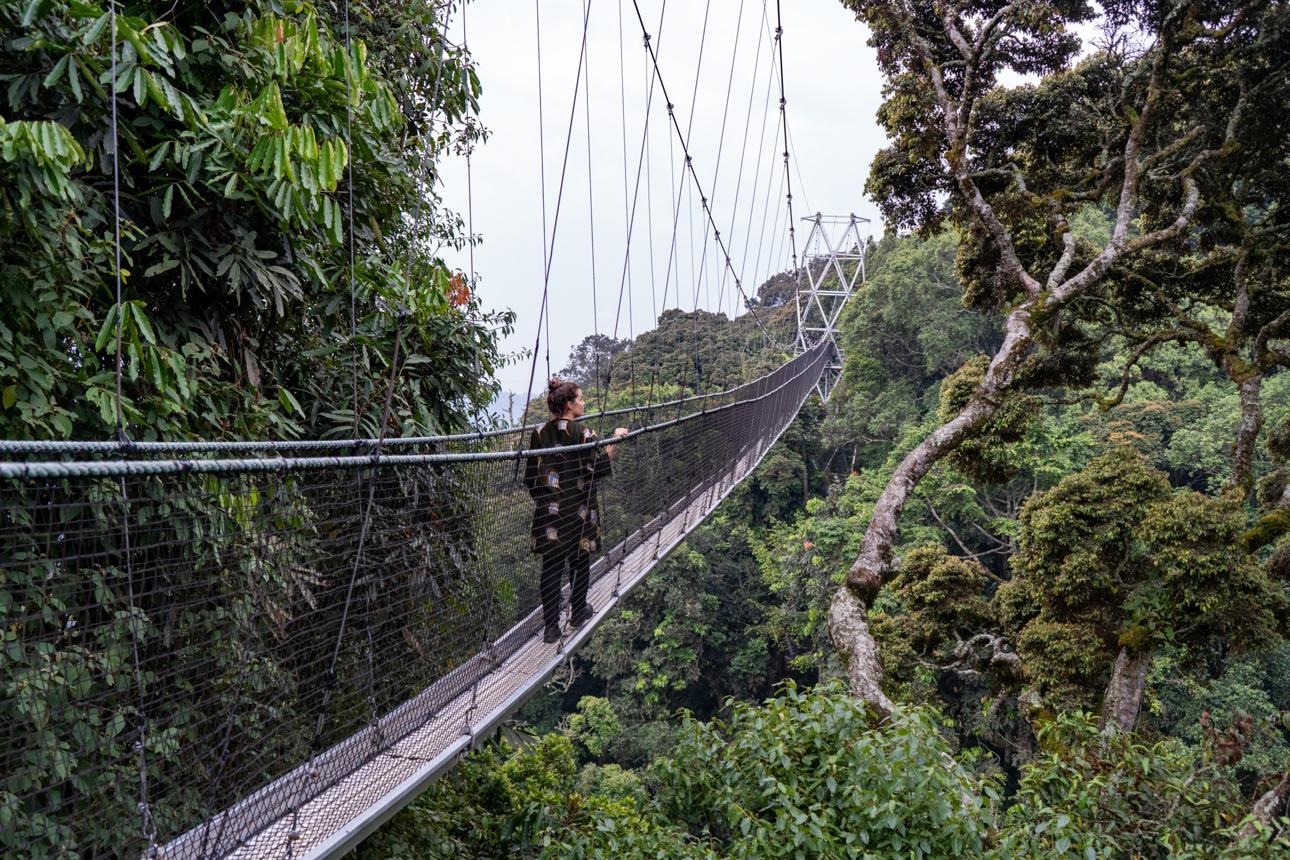
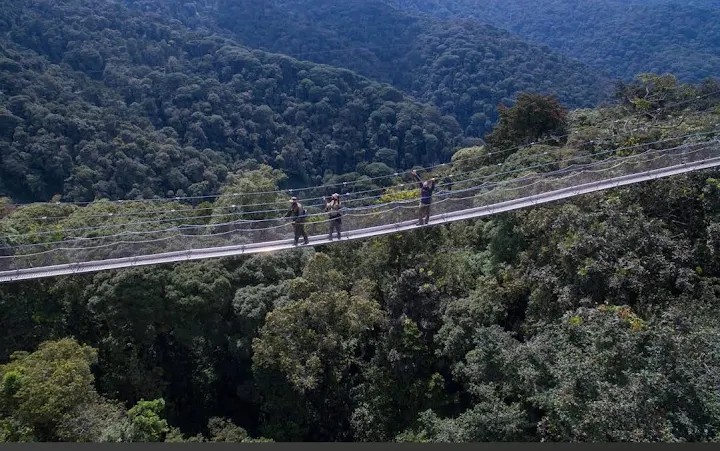
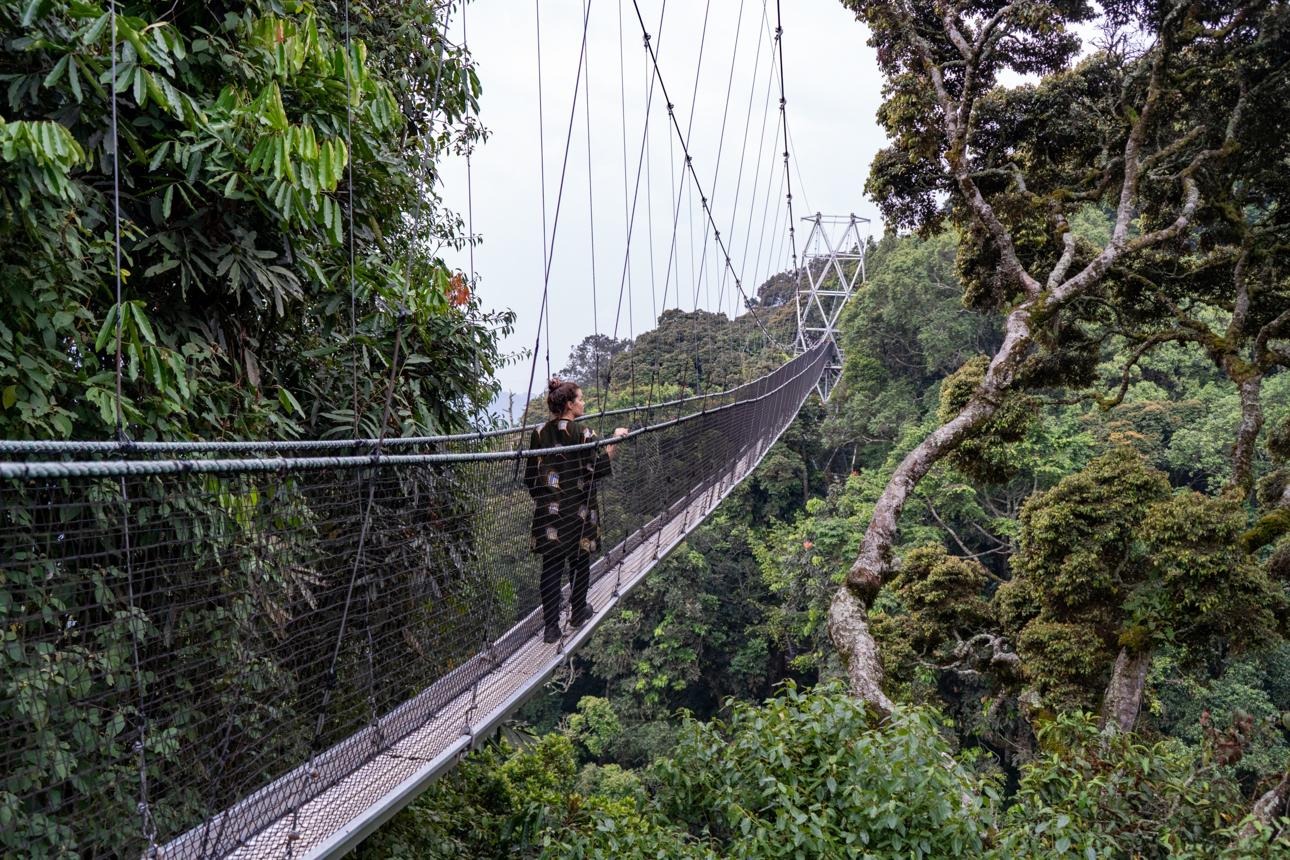
The Nyungwe Canopy Walkway is one of the park's signature attractions. It offers visitors an elevated view of the rainforest that cannot be experienced from an ordinary forest trail.
Suspended above the forest floor, the walkway provides a remarkable perspective of the upper canopy, distant valleys, and surrounding mountain landscape. The experience combines adventure, scenery, wildlife observation, and an appreciation of the forest's ecological importance.
Walking above an ancient rainforest
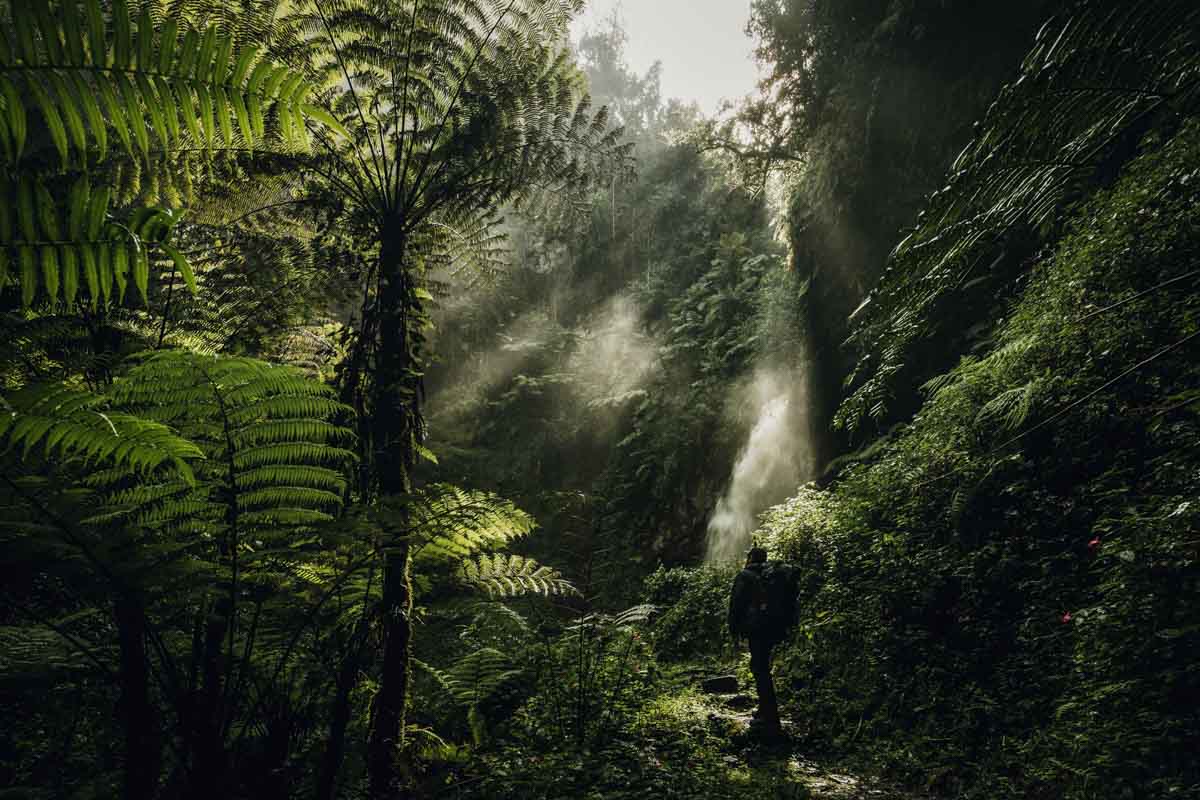
The canopy is an active world of its own. Birds move through the branches, monkeys may appear among the trees, and the changing light reveals different shades of green across the forest.
As you cross the suspended walkway, you gain a better understanding of how complex a rainforest ecosystem can be. The forest is not merely a collection of trees; it is a living network of habitats supporting many species.
For photographers, the walkway offers opportunities to capture the forest from an unusual angle. For nature enthusiasts, it provides a chance to appreciate the scale and diversity of Nyungwe's mountain rainforest.
Is the Nyungwe Canopy Walk safe?
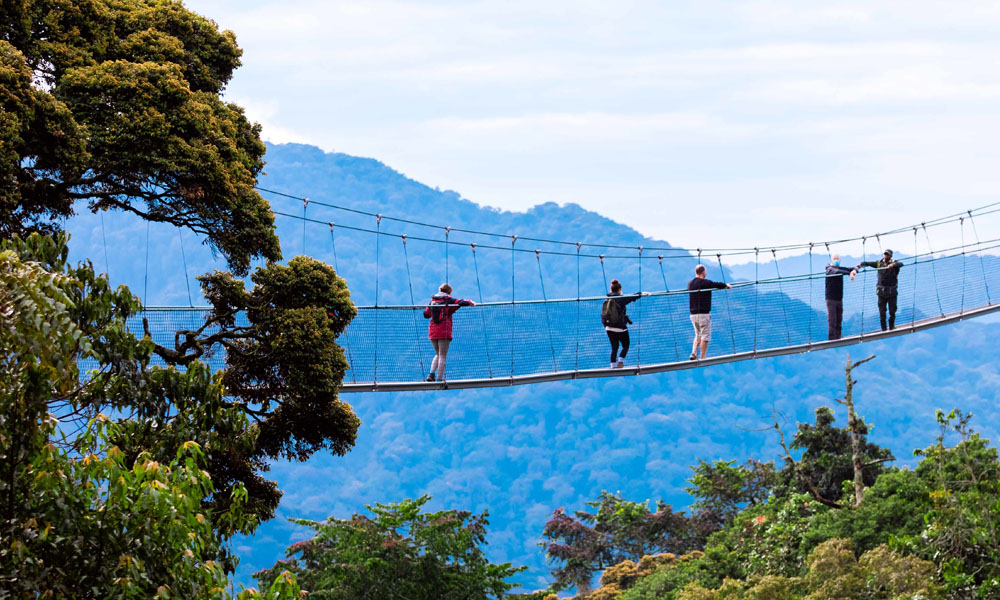
The canopy walk is a managed visitor activity, and guests should follow the instructions of park staff and guides throughout the experience.
Before booking, visitors should confirm the current operating arrangements, applicable age or other participation requirements, and any restrictions related to weather or safety.
Wear secure footwear, listen to your guide, and avoid running or making sudden movements on the bridge. If you are uncomfortable with heights, let your tour organiser know in advance so that you can decide whether the experience is suitable for you.
How long does the Nyungwe Canopy Walk take?
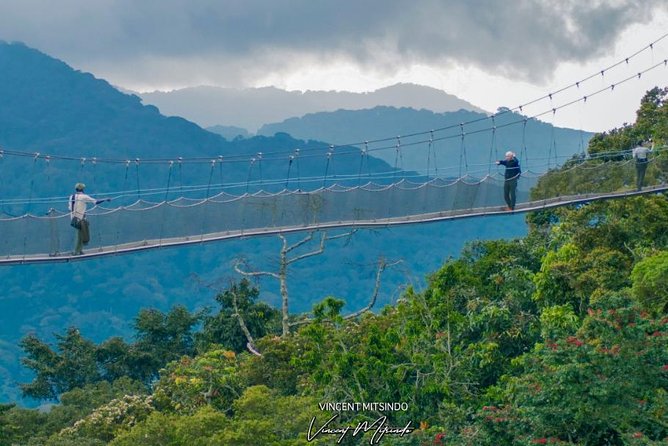
Allow approximately two to three hours for the canopy-walk experience, including the guided approach and time to enjoy the views. The actual duration can vary depending on the pace of the group, weather, and current park arrangements.
The canopy walk begins at Uwinka Visitor Centre, making this area an important starting point for visitors planning forest activities.
Travel tip: Do not plan your visit around the bridge alone. Combining the canopy walk with another suitable activity, such as birdwatching, a forest trail, or a zipline session, can make your time in Nyungwe much more rewarding.
Nyungwe Forest National Park: A History of Conservation and Resilience
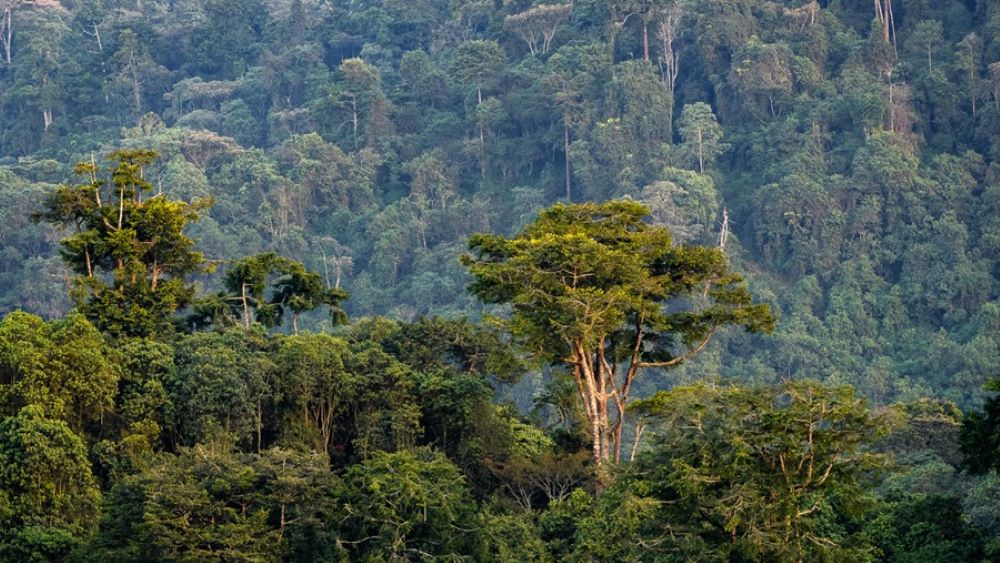
To understand why Nyungwe deserves a place among Africa's most remarkable nature destinations, it helps to look beyond its scenery.
Its importance comes from the exceptional forest it protects, the species that depend on it, and the continuing work required to conserve this natural heritage.
From a natural reserve to a national park
Nyungwe's protection has developed over many decades.
- 1933: The forest was established as a natural reserve.
- 2005: Nyungwe became a national park, strengthening its protection and conservation framework.
- 2020: The Government of Rwanda and African Parks entered into a 20-year management partnership to support the park's long-term protection.
- 2023: Nyungwe was inscribed on the UNESCO World Heritage List.
- 2026–2027: Visitors can discover the forest through managed tourism experiences that connect wildlife conservation, environmental education, and local economic opportunities.
These milestones demonstrate how Nyungwe has evolved from a protected forest into a destination of international conservation significance.
Why Nyungwe's biodiversity matters
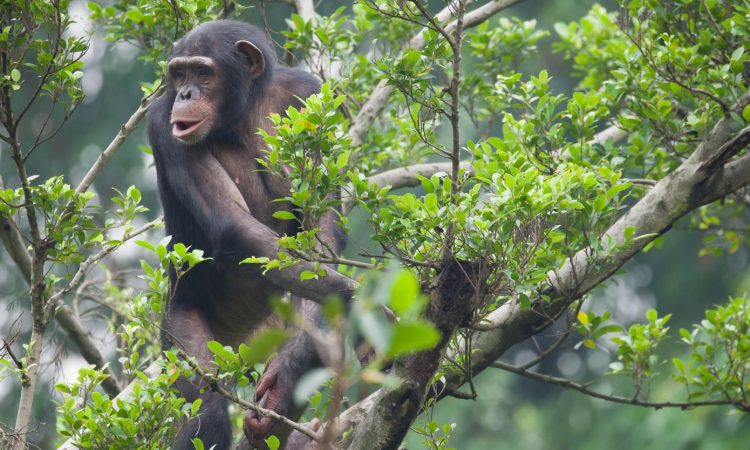
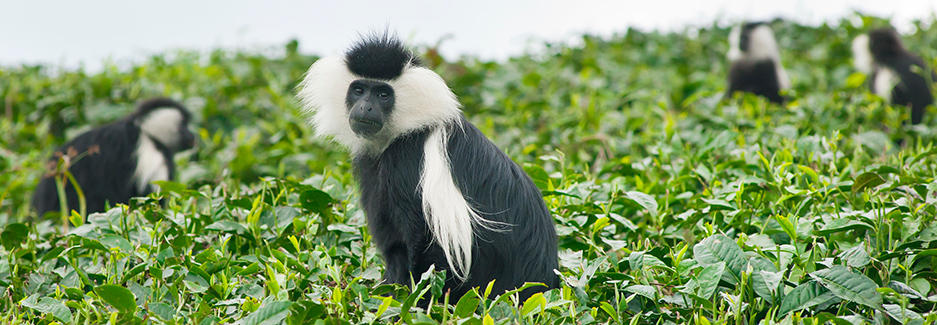
Nyungwe is home to chimpanzees, Ruwenzori black-and-white colobus monkeys, L'Hoest's monkeys, and numerous other forest species. Its varied habitats also support an exceptional range of plants and birds.
The forest is important far beyond its boundaries. It contributes to the protection of water resources and the ecological health of the wider region, helping sustain natural systems on which people and wildlife depend.
The park also protects habitats associated with species that are threatened or found in relatively few places worldwide.
For visitors, this means that every guided walk can become an opportunity to understand the relationship between wildlife, forests, water, climate, and human communities.
How conservation is supported today
Nyungwe's management involves the Rwanda Development Board and African Parks, working within a long-term conservation framework.
Activities include ranger patrols, wildlife monitoring, habitat restoration, research, and engagement with neighbouring communities. Community participation is especially important because conservation is more sustainable when local people benefit from protecting natural resources.
Responsible tourism contributes to this wider effort. By paying for authorised activities and accommodation, following park rules, and choosing respectful travel practices, visitors can help support the system that protects the forest.
Why this matters for 2026–2027: Nyungwe is not valuable simply because it looks beautiful. Its importance rests on a long history of protection and the continuing work required to conserve a globally significant ecosystem.
Why Nyungwe Is Different from the Serengeti and Maasai Mara
The Serengeti in Tanzania and the Maasai Mara in Kenya are internationally celebrated for their open grasslands, large wildlife populations, and the Great Migration. These destinations deserve their reputations, particularly for travellers who dream of seeing vast herds of wildebeest and zebras moving across the savannah.
Nyungwe offers a different kind of adventure.
It should not be presented as a replacement for the Great Migration. Instead, it is an outstanding complementary destination for travellers who want to discover another dimension of African wildlife.
What makes Nyungwe unique?
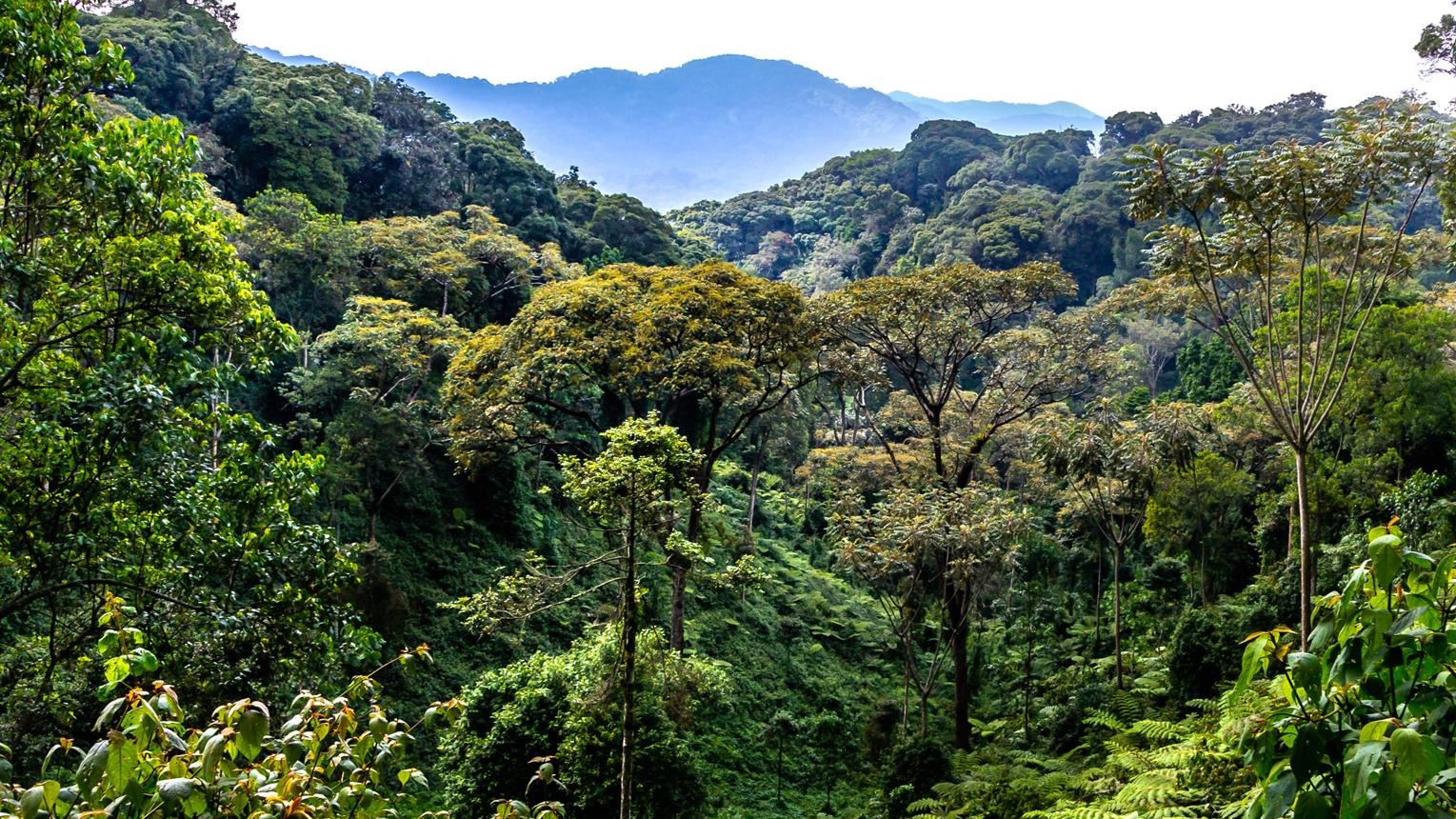
First, the forest experience is immersive. Instead of scanning open plains from a safari vehicle, you enter a layered ecosystem where the sounds of birds, insects, flowing water, and moving branches become part of the adventure.
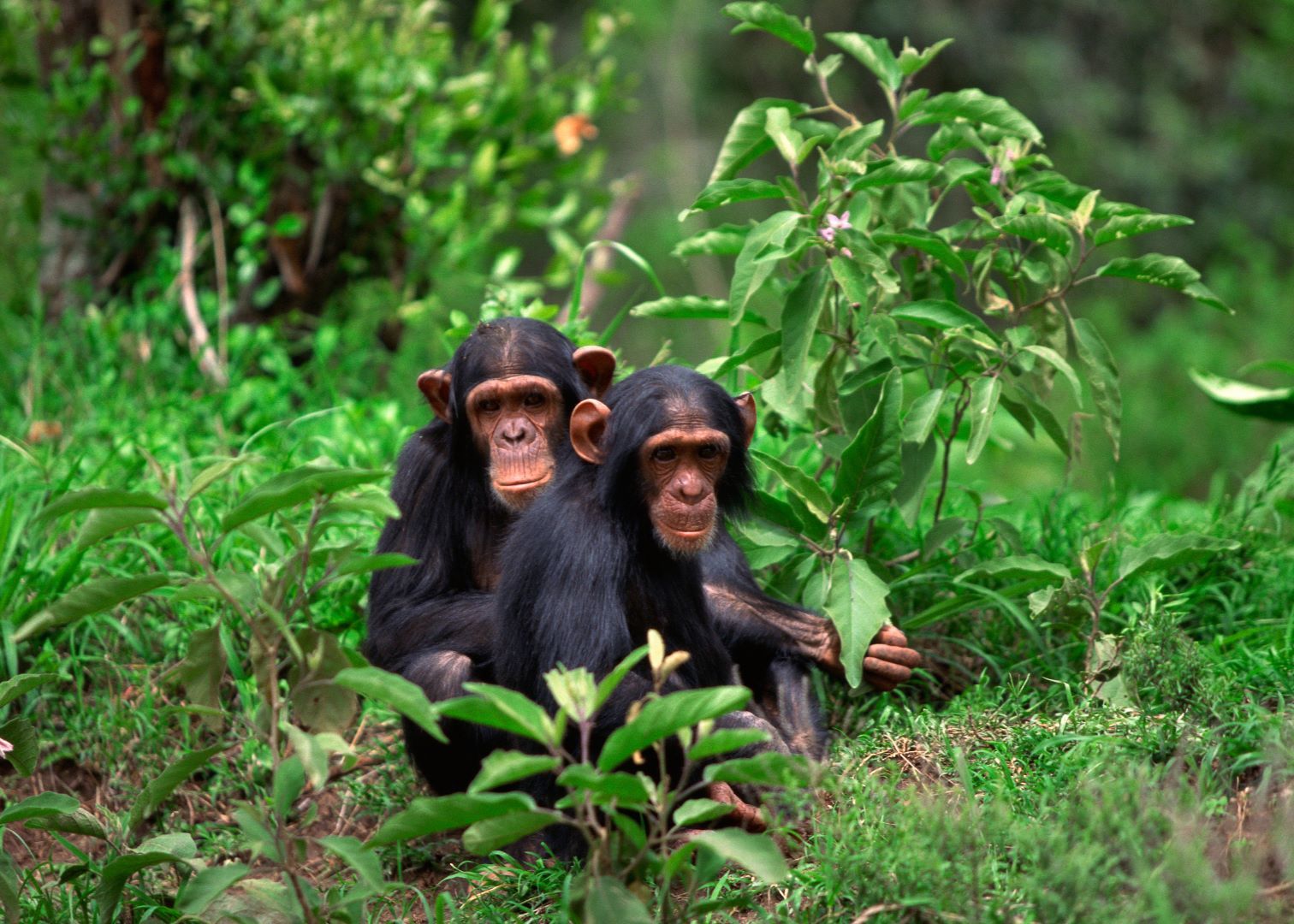
Second, chimpanzee trekking creates a different connection with wildlife. Observing chimpanzees in their natural habitat requires patience, walking, and the guidance of experienced trackers.
Third, Nyungwe combines nature with adventure. The canopy walkway, zipline, and hiking trails allow visitors to experience the landscape in different ways.
Fourth, its conservation importance is internationally recognised. UNESCO World Heritage status reinforces the significance of protecting this rainforest for future generations.
The best strategy: If you have enough time, combine Nyungwe with Akagera National Park and Volcanoes National Park. Akagera provides classic savannah game drives and a chance to search for the Big Five, Volcanoes offers mountain gorilla trekking, and Nyungwe introduces you to rainforest wildlife and adventure.
Together, these destinations create a varied Rwanda safari rather than repeating the same experience in different locations.
What to Do in Nyungwe National Park Besides Game Drives
Nyungwe is a rainforest destination, so traditional savannah-style game drives are not its defining activity. Visitors generally explore the forest through guided walks, primate tracking, hiking, and specialist nature experiences.
There is plenty to do beyond the canopy walkway.
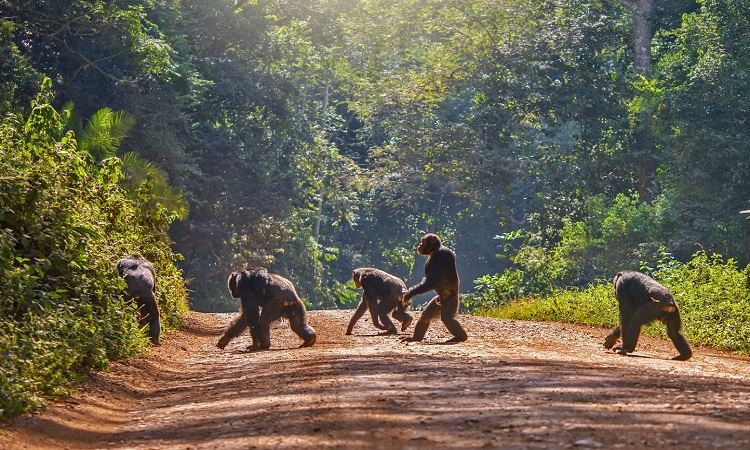
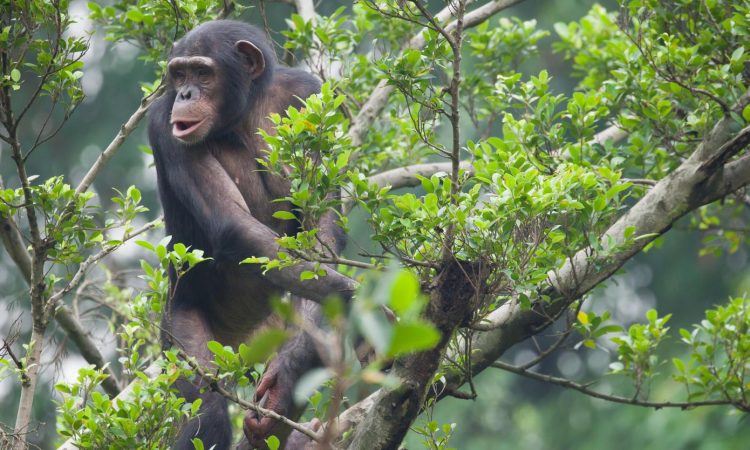
Chimpanzee trekking in Nyungwe Forest
[Image placement: A wild chimpanzee moving through the green branches of Nyungwe Forest.]
Chimpanzee trekking is one of the park's most memorable wildlife experiences.
The adventure usually begins early in the morning, when visitors meet their guides and receive instructions before entering the forest. Trackers work to locate the chimpanzees, whose movements and vocalisations can make the search exciting and unpredictable.
Once the chimpanzees are located, visitors may observe them feeding, moving through the trees, grooming one another, or communicating within their group, subject to the official viewing rules.
Unlike a conventional game drive, chimpanzee trekking involves walking through forest terrain. Trails can be muddy, steep, or slippery, and the time required to find the animals varies.
Sightings are not guaranteed because chimpanzees are wild animals.
Why choose this experience? It provides a close look at the behaviour of one of our closest living animal relatives while supporting the protection of its forest habitat.
Book through the authorised park system, confirm the permit requirements, and follow all wildlife-viewing instructions.
Explore Ndambarare and Kamiranzovu waterfalls
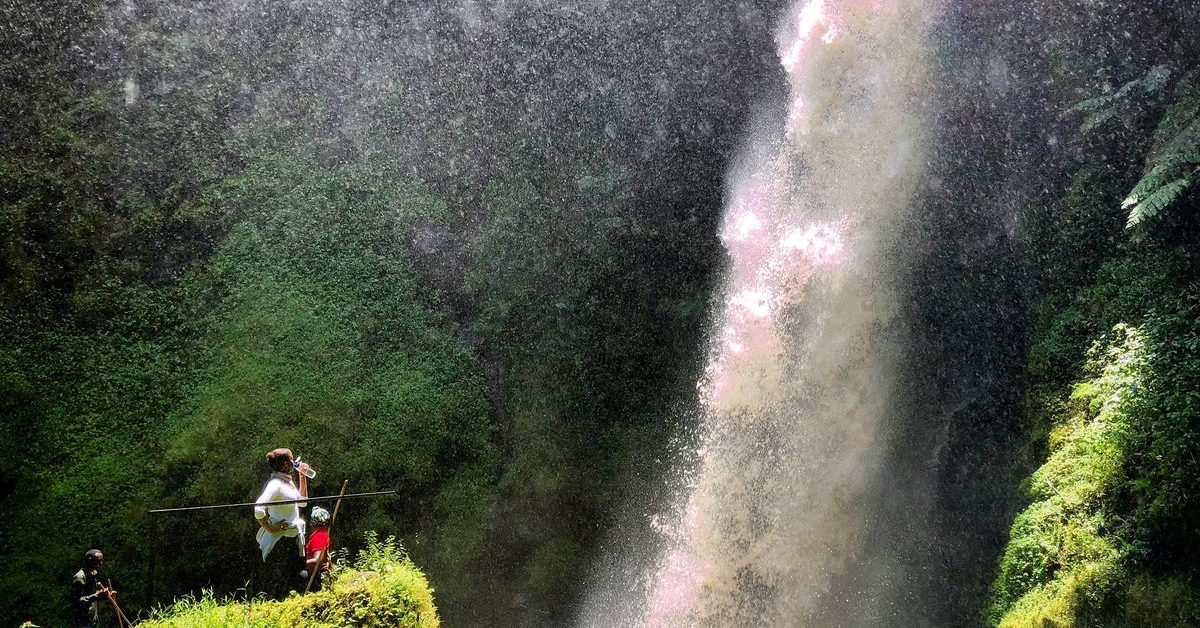
[Image placement: A waterfall flowing through a lush green forest, surrounded by moss-covered vegetation.]
Nyungwe's waterfalls bring another dimension to the forest experience.
The walk towards a waterfall can take you through dense vegetation, along natural trails, and past the sounds of streams and birds. Reaching the water offers a rewarding moment to rest, photograph the landscape, and appreciate the forest's moisture-rich environment.
Ndambarare Waterfall is a popular attraction, while Kamiranzovu offers a different perspective on Nyungwe's wetland and forest landscape.
Waterfall visits should be planned around the appropriate trail, available time, weather, and your fitness level. Some hikes require several hours, so they should not be added to a tightly scheduled day without checking the actual route and conditions.
Experience the Nyungwe Zipline
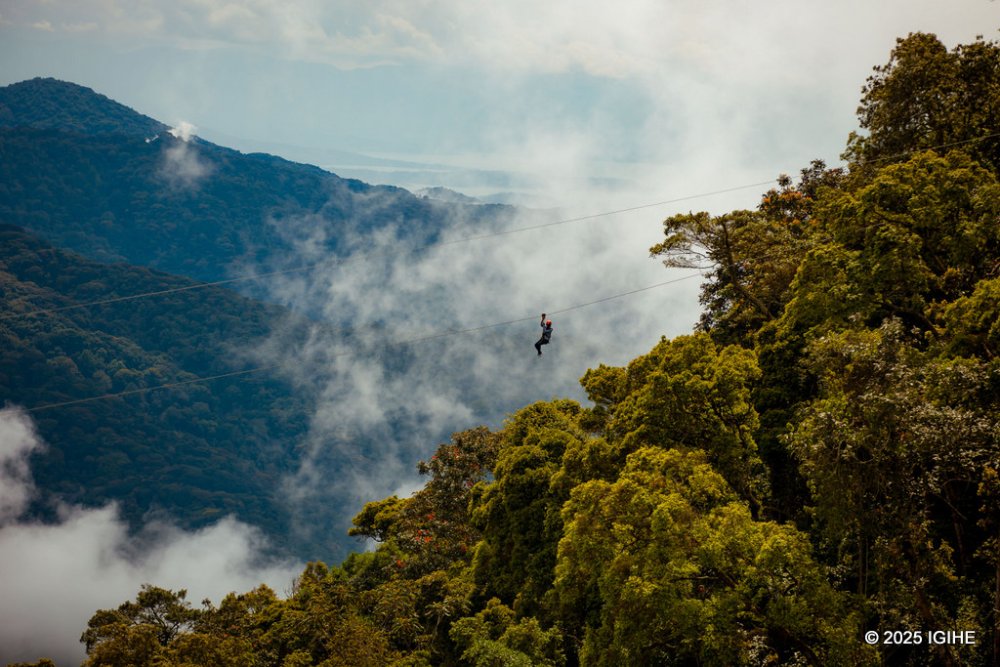
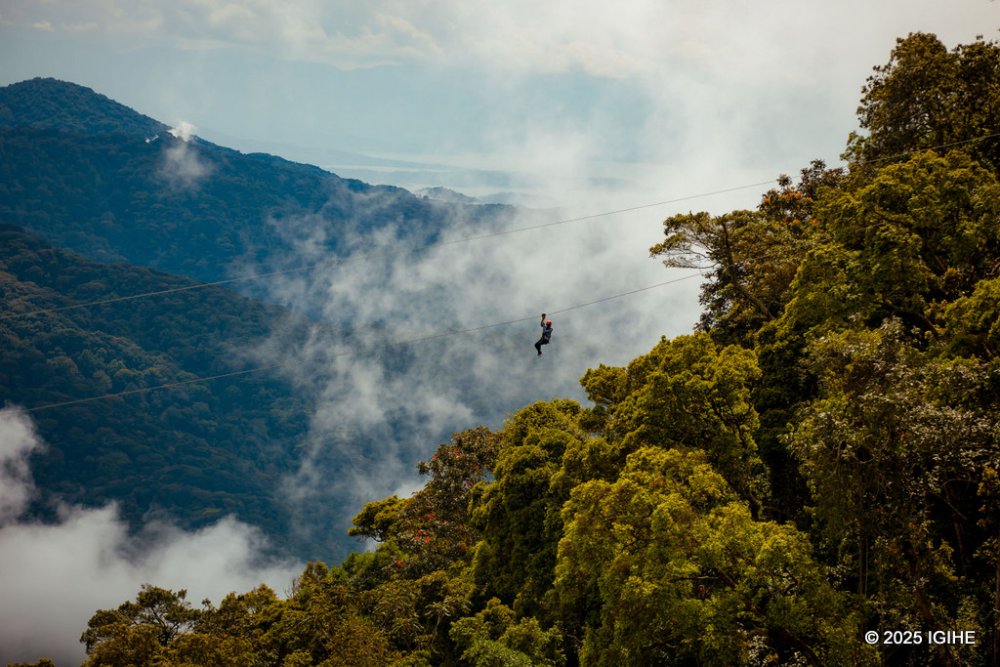
[Image placement: A visitor secured in a harness travelling along a zipline above the green forest canopy.]
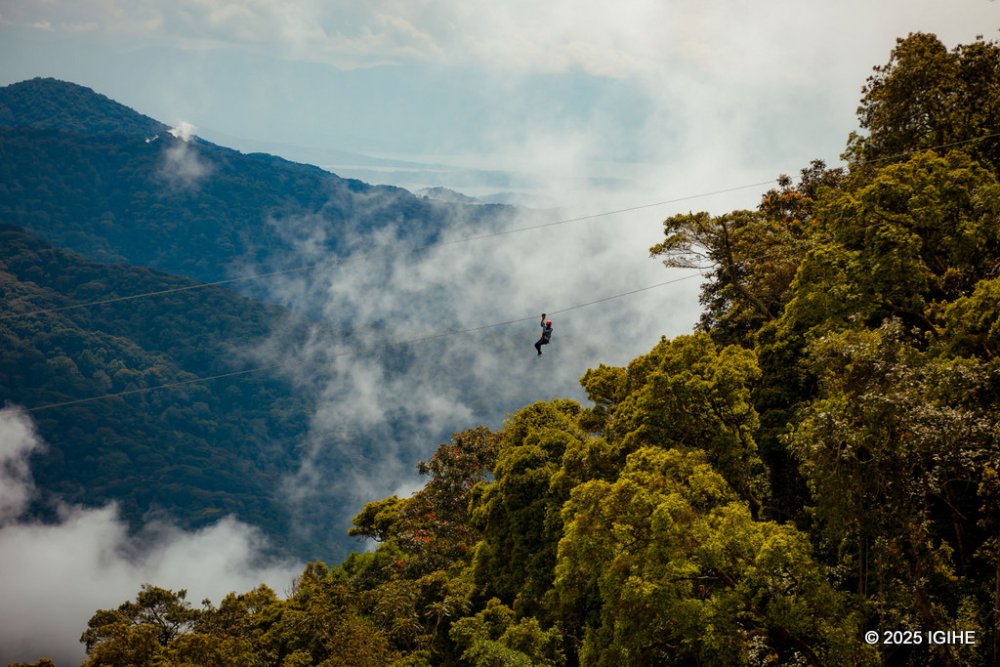
For travellers who enjoy adventure, the Nyungwe Zipline offers an exhilarating way to experience the forest from above.
The official park website describes a 1,935-metre zipline divided into three sections. It gives participants a thrilling perspective of the surrounding forest while offering an activity that contrasts with the slower pace of birdwatching and hiking.
Before booking, confirm the available departure time, equipment requirements, participation conditions, and whether your selected package includes the canopy walk or other activities.
The zipline is especially attractive for adventurous couples, families with eligible participants, and travellers who want more than a conventional nature walk.
Discover Nyungwe's exceptional birdlife
[Image placement: A colourful forest bird perched on a branch in Nyungwe's montane rainforest.]
Nyungwe is an excellent destination for birdwatchers, including those interested in Albertine Rift endemics.
The park's different elevations and habitats support a rich variety of bird species. With an experienced guide, visitors can learn to recognise bird calls, identify species by their markings, and understand the relationships between birds and the forest ecosystem.
Bring binoculars and a camera with a suitable zoom lens. Early-morning outings are particularly useful for travellers who want to devote more time to birdwatching.
Hike through the forest's network of trails
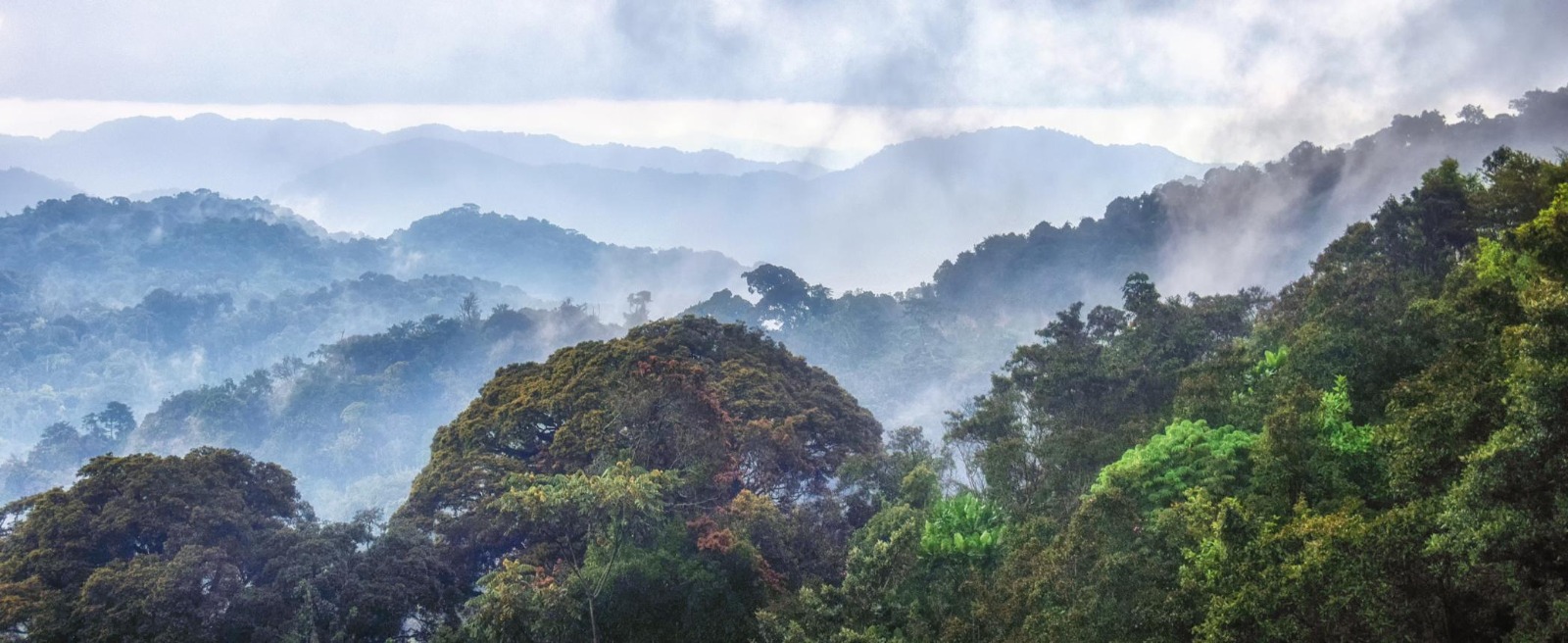
Nyungwe has an extensive network of nature trails that allows visitors to explore the landscape on foot.
Depending on the route, a hike may reveal giant trees, bamboo vegetation, moss-covered branches, mountain views, and signs of wildlife. Some trails are suitable for shorter walks, while others demand greater endurance and more time.
Speak with your guide before selecting a route. The right trail depends on your fitness, available daylight, interests, and weather conditions.
See colobus monkeys and other forest primates
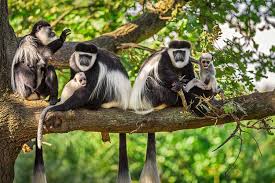
Nyungwe is known for its diverse primate life, including Ruwenzori black-and-white colobus monkeys and L'Hoest's monkeys.
Colobus groups can be particularly exciting to observe as they move through the trees. Their striking black-and-white coats and coordinated movements offer excellent opportunities for wildlife photography.
The forest is also home to other monkey species, although sightings depend on their movements and the location of your excursion.
Enjoy a tea-estate experience
The landscape around Nyungwe includes tea-growing areas that contrast beautifully with the surrounding rainforest.
A tea-estate visit can introduce you to local agricultural practices and the relationship between tourism, farming, and the communities around the park. It can also provide a relaxing stop between forest activities.
Ask your tour organiser to confirm which estate visits are available and whether a guided experience needs to be arranged in advance.
Try the Gisakura Rope Course
For another active experience, visitors can ask about the Gisakura Rope Course, which features suspended obstacles that test balance and coordination.
It offers a different type of adventure from the canopy walkway and zipline, making it worth considering for travellers who want to combine nature with a physical challenge.
Availability, participation conditions, and the time needed should be confirmed before including it in your itinerary.
How the Nyungwe Canopy Walk and Zipline Are Organised
One of the advantages of visiting an established park destination is that activities are managed through designated visitor facilities rather than requiring travellers to organise every forest experience independently.
Nyungwe's visitor centres include Uwinka, Gisakura, and Gisovu, which provide access to visitor information and selected services.
Where does the canopy walk start?
The Nyungwe Canopy Walkway starts at Uwinka Visitor Centre.
Visitors should allow time to check in, meet their guide, receive instructions, and follow the designated route. The activity should be booked and confirmed through the official park channels or a recognised tour operator.
Can you combine the canopy walk and zipline?
Yes, these activities can be combined into a planned adventure day, subject to confirmed availability and scheduling.
A practical order is to complete the canopy walk and then proceed to a confirmed zipline session, or to follow the order assigned by park staff. Do not assume the activities operate at any time you choose; verify the day's schedule before travelling.
What about waterfalls and chimpanzee trekking?
These activities require separate planning. Chimpanzee trekking normally involves an early start and a variable amount of walking, while waterfall hikes can take several hours.
Although it may be possible to combine some activities, doing everything in one day can leave you rushed or exhausted.
For a better experience, allow two or three days if you want to combine the canopy walk, zipline, waterfall hiking, and chimpanzee trekking.
Official planning resource: Nyungwe National Park visitor information and booking.
One-Day Nyungwe Zipline and Canopy Walk Itinerary
This itinerary is designed for travellers who are already staying near Nyungwe Forest National Park. It is particularly suitable for those who want a full adventure day without adding chimpanzee trekking.
Morning: Arrive at Uwinka Visitor Centre
8:00 AM – 8:30 AM: Arrival and preparation
Arrive at the visitor centre, confirm your bookings, meet your guide, and receive the necessary safety instructions.
Take a moment to appreciate the cool mountain air and surrounding forest scenery before beginning your activities.
8:30 AM – 11:00 AM: Nyungwe Canopy Walk
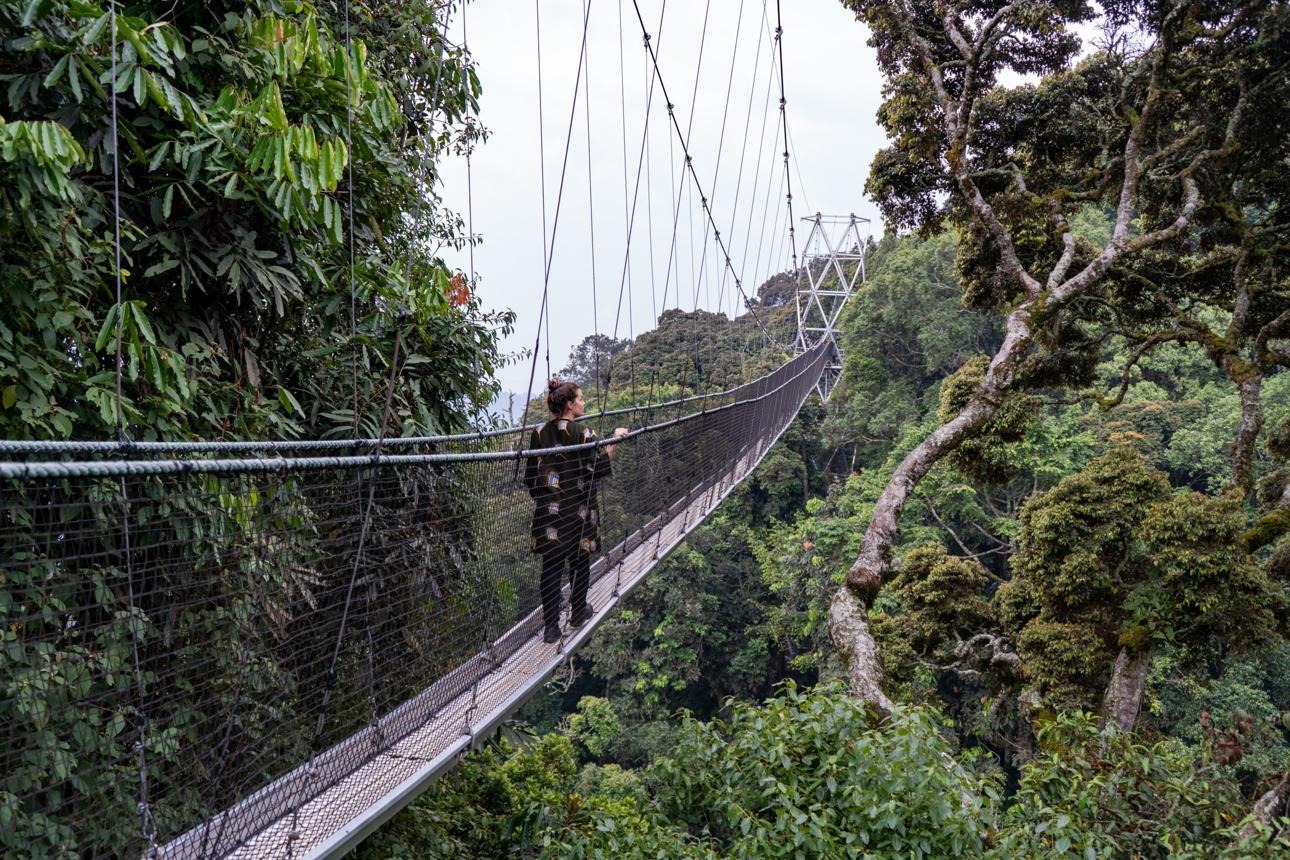
Begin the canopy-walk experience with your guide. Follow the forest approach, cross the suspended walkway, and enjoy the views of the rainforest canopy and distant green valleys.
Take photographs where permitted and listen as your guide explains the forest ecosystem and its importance to wildlife.
[Image placement: Travellers walking across the Nyungwe Canopy Walkway with a wide view of the forest below.]
Midday: Rest and enjoy lunch
11:00 AM – 12:00 PM: Break and refreshments
Return to the visitor facilities, enjoy refreshments or lunch where available, and allow time to rest.
Keep your camera ready, but remember that the forest is a natural environment. Wildlife sightings are never guaranteed.
Afternoon: Experience the Nyungwe Zipline
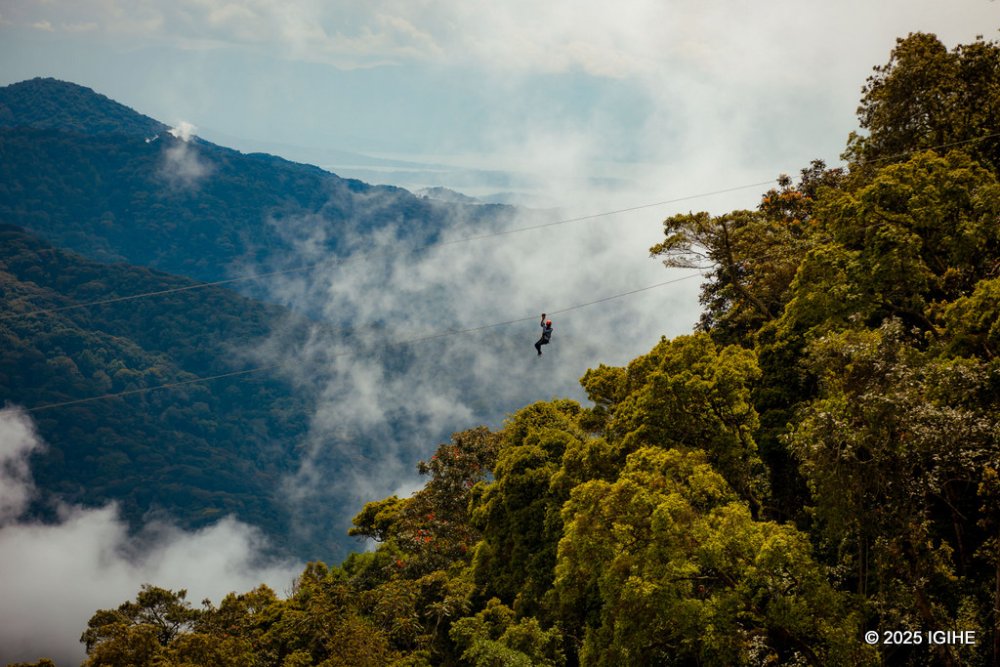
12:00 PM – 2:00 PM: Zipline adventure
Proceed to your confirmed zipline session. After the safety briefing and equipment checks, enjoy the experience of travelling above the forest canopy.
The exact duration depends on the operating arrangements, waiting time, and activity schedule.
2:00 PM – 3:00 PM: Relax and enjoy the forest surroundings
Take time for refreshments, photographs, or a short additional walk if conditions and your schedule permit.
3:00 PM onwards: Return to your lodge
Return to your accommodation and enjoy a relaxing evening surrounded by Rwanda's forest landscapes.
Important: This schedule is illustrative, not an official activity timetable. Confirm the sequence and times with park management or your tour organiser.
Can you do this as a one-day trip from Kigali?
It is technically possible to travel to Nyungwe and attempt selected activities in one long day, but it is generally not the best option.
Nyungwe is approximately 225 kilometres from Kigali, and the drive commonly takes around six to seven hours each way. That makes a same-day return extremely demanding and leaves little flexibility for weather, road conditions, activity schedules, or delays.
For travellers starting in Kigali, we recommend staying at least one night near the park. A two-day trip offers a more comfortable experience, while three days are better for combining several activities.
Two-Day Chimpanzee Trekking Tour in Nyungwe from Kigali
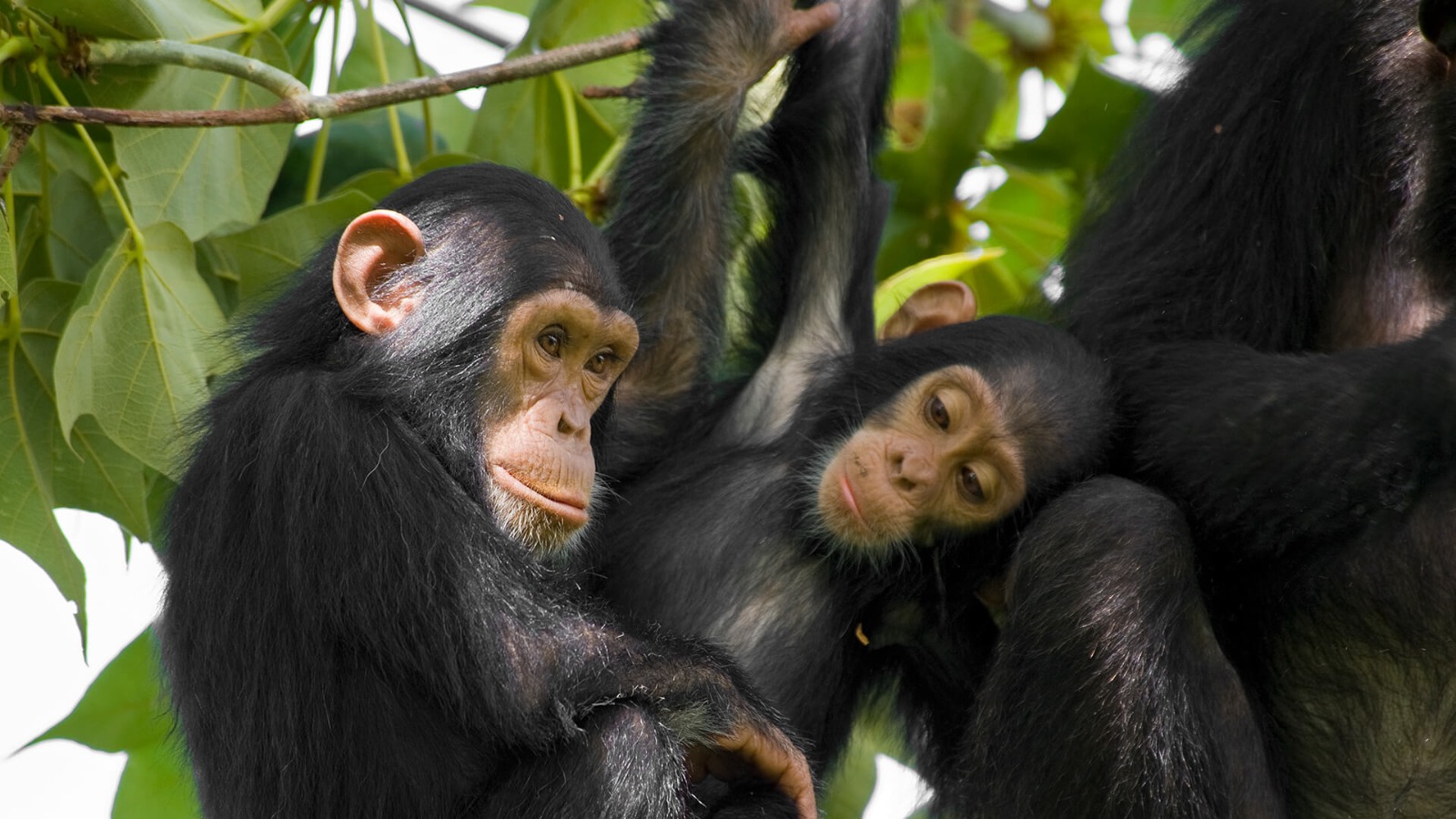
For travellers who want to experience Nyungwe's most famous primate encounter, this two-day itinerary combines the journey from Kigali with an early-morning chimpanzee trek.
The itinerary is designed to balance travel time, wildlife viewing, and relaxation rather than attempting too many activities in a short period.
Day 1: Kigali to Nyungwe Forest National Park
[Image placement: A scenic view of Rwanda's rolling green hills and tea plantations along the road towards Nyungwe.]
7:00 AM – Departure from Kigali
Meet your driver-guide at your hotel or another agreed pickup point. After a short briefing, begin the drive towards southwestern Rwanda.
The journey passes through Rwanda's beautiful countryside, with opportunities to appreciate the rolling hills, cultivated landscapes, and changing scenery.
10:00 AM – Scenic stop and refreshments
Depending on the route and road conditions, take a short break for refreshments or photographs.
Your driver-guide can explain the region's landscapes and help you understand how Rwanda's rural communities and agricultural activities fit into the wider journey.
12:30 PM – Lunch en route
Stop for lunch at an appropriate restaurant or confirmed location. Timing may vary according to the route and departure time.
2:30 PM – Arrival near Nyungwe
Arrive in the Nyungwe area, check in at your selected accommodation, and prepare for the following morning's early start.
If time, weather, and your confirmed activity schedule permit, you may visit a tea estate or enjoy a short walk near your lodge.
5:30 PM – Dinner and briefing
Enjoy dinner and review the next day's chimpanzee trekking arrangements with your guide. Confirm the meeting point, departure time, required documents, clothing, and what to carry.
Overnight: Stay at a selected lodge or guesthouse near the park or the designated chimpanzee trekking access point.
Day 2: Chimpanzee trekking and return to Kigali
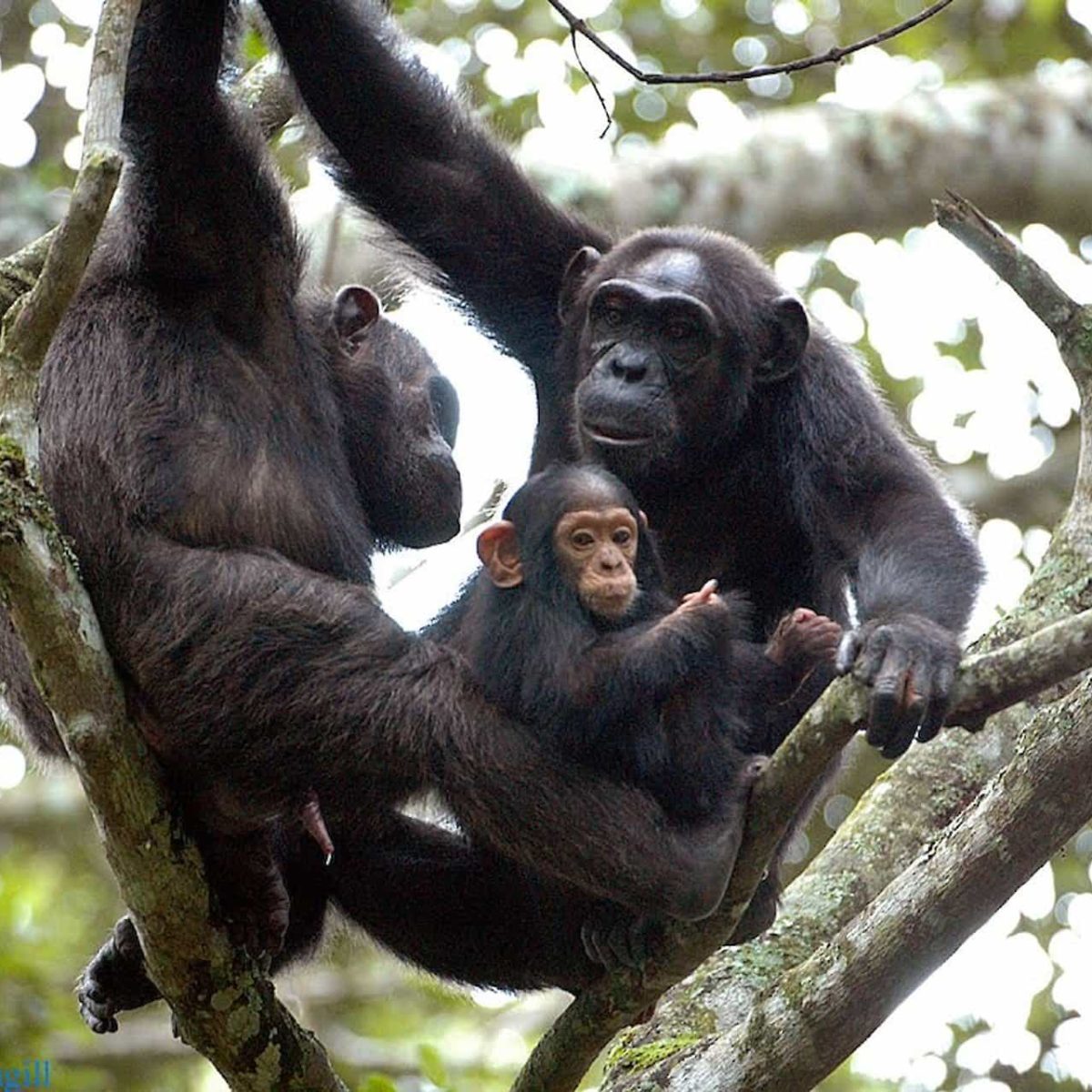
[Image placement: A chimpanzee in its natural rainforest habitat, photographed from a respectful distance.]
Early morning – Breakfast and transfer
Wake up early, have breakfast, and travel to the designated meeting point for your confirmed chimpanzee trekking activity.
The exact departure time and location depend on the chimpanzee community and arrangements assigned by park management.
Morning – Chimpanzee trekking
Meet the park team and receive a briefing on safety, wildlife behaviour, and conservation rules.
Then enter the forest with your guide and trackers. The search can involve walking on uneven, muddy, or steep terrain, and the duration varies according to the chimpanzees' movements.
Once the animals are located, observe them according to the park's viewing rules. Watch for feeding, grooming, movement, and communication while respecting the required distance and instructions from your guide.
Late morning – Return and refreshments
After the trek, return to the meeting point, freshen up, and enjoy refreshments or lunch according to your schedule.
Early afternoon – Begin the journey back to Kigali
Depart for Kigali, with suitable stops along the way.
Late afternoon or evening – Arrival in Kigali
Arrive in Kigali according to road conditions and the day's timing.
Because the drive is long and chimpanzee trekking can be physically demanding, allow flexibility rather than promising an exact arrival time.
Is two days enough for chimpanzee trekking?
Two days can work well if your primary goal is chimpanzee trekking and you are comfortable with a long drive.
However, if you also want the canopy walk, zipline, and waterfall hiking, we recommend extending the trip to three days. This gives you more time to appreciate Nyungwe without rushing between activities.
Booking note: Chimpanzee permits, activity availability, and access arrangements must be confirmed before travel. Sightings are not guaranteed, and the itinerary may need to change to reflect official park instructions.
Where to Stay: Lodges and Accommodation in Nyungwe
Choosing the right accommodation can make a major difference to your Nyungwe experience, especially if you plan to start early for chimpanzee trekking or want to enjoy the canopy walk and other activities without rushing.
Options range from high-comfort forest retreats to practical guesthouses and campsites.
Luxury and high-comfort stays
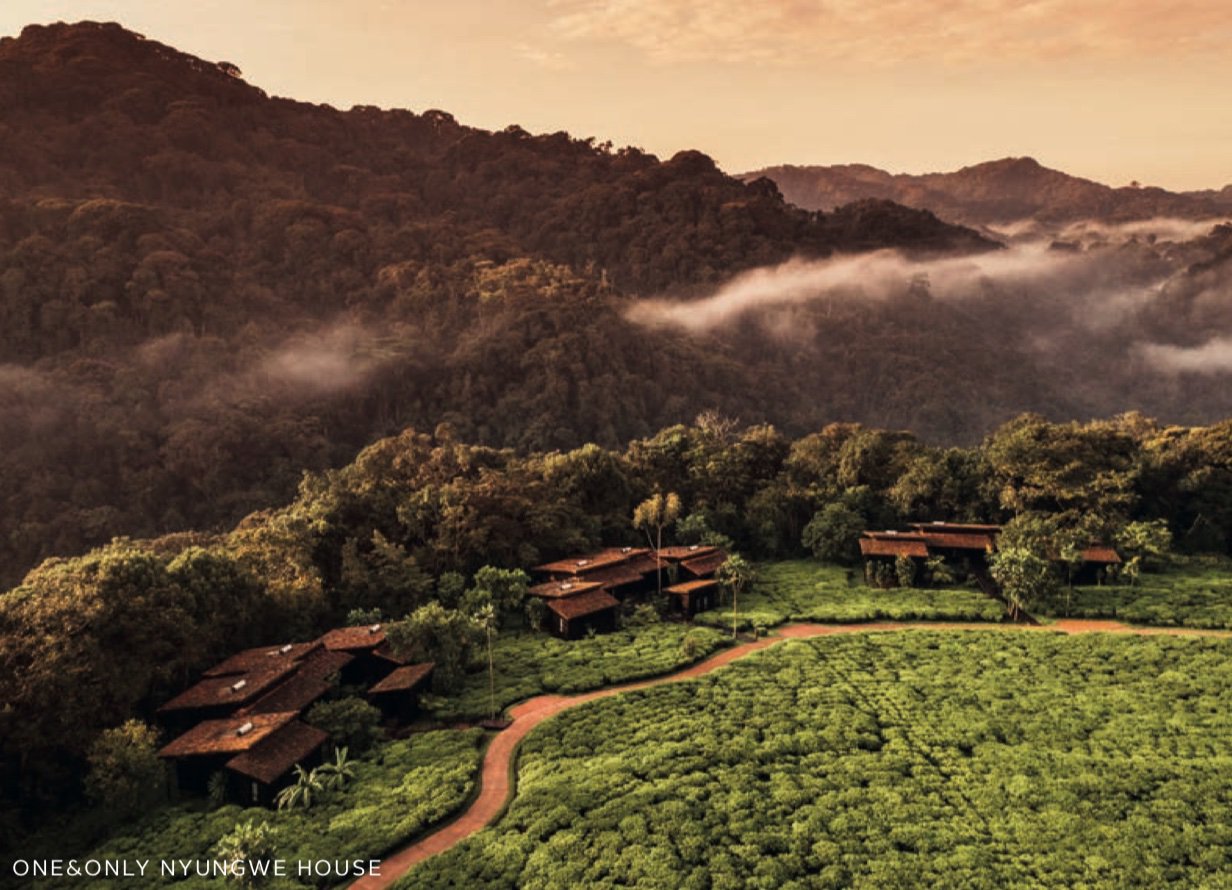
Nyungwe Tea Forest Resort
[Image placement: An elegant forest-side resort surrounded by tea fields and green mountain scenery.]
Nyungwe Tea Forest Resort is an option for travellers seeking a more upscale stay in a landscape of tea plantations and forest. Its accommodation concept includes villas and treehouses, offering a nature-focused setting.
It may suit couples, honeymooners, and visitors who want to combine rainforest activities with a more leisurely resort experience.
Confirm the room category, current facilities, meal arrangements, and transfer times when booking.
Eco-friendly forest accommodation
Munazi Lodge
Munazi Lodge offers A-frame cabins in a peaceful natural setting near the Nyungwe area. Its design incorporates reclaimed wood and locally crafted elements, reflecting an emphasis on the surrounding environment.
This is worth considering for travellers who prefer a quieter, nature-oriented stay while maintaining access to the main road and planned park activities.
Practical guesthouses and campsites
Uwinka Campsites and Guesthouse
Uwinka is especially convenient for visitors planning to take the canopy walk, since the visitor centre is the starting point for that experience.
The facilities include campsites and a self-catering guesthouse, offering a more practical option for travellers who want to stay close to the park's central visitor facilities.
Gisakura Campsite
Gisakura Campsite provides a forest setting close to tea plantations and the park's western corridor. It can be useful for travellers interested in waterfall hiking, community visits, and selected chimpanzee trekking arrangements.
Gisovu Guesthouse
Gisovu Guesthouse offers a quieter setting with views towards Lake Kivu and Nyungwe's surrounding mountains. It may suit visitors seeking a simple, scenic base in the northern part of the park area.
Nyungwe Top View Hill Hotel
This hotel is another accommodation option in the wider Nyungwe area, known for its elevated setting and views of the surrounding forest, tea plantations, and distant landscape.
It may appeal to travellers who prefer hotel-style rooms and panoramic scenery.
How should you choose?
- For comfort and a special occasion: Consider a resort or higher-comfort lodge.
- For easy access to the canopy walk: Look closely at Uwinka and your confirmed activity departure point.
- For budget-conscious travel: Compare guesthouses and campsites, including meals and transport costs.
- For chimpanzee trekking: Select accommodation based on the confirmed meeting point for your trek, rather than assuming all activities begin at Uwinka.
Accommodation standards, facilities, and prices vary. Confirm availability and the precise location before paying, particularly for stays during busy travel periods in 2026–2027.
Best Time to Visit Nyungwe Canopy Walk in 2026–2027
Nyungwe can be visited throughout the year, but weather conditions can influence hiking comfort, visibility, trail conditions, and the overall experience.
Drier periods
June to September is generally one of Rwanda's drier periods. These months can be attractive for travellers who prefer relatively drier trails and opportunities to combine several outdoor activities.
December to February is another comparatively drier period, although rainfall can still occur in the rainforest.
Wetter periods
March to May and parts of the September-to-November period are generally wetter in much of Rwanda. Forest conditions vary, and rain can make trails muddy or slippery.
However, the rainforest's changing light, mist, and lush vegetation can be particularly beautiful during wetter conditions.
Which season should you choose?
If you want to combine the canopy walk, chimpanzee trekking, ziplining, and waterfall hiking, choose dates that allow sufficient flexibility.
No season guarantees perfect weather or wildlife sightings. Before departure, check the forecast, confirm that your selected activities are operating, and pack suitable rain protection.
What to Pack for the Nyungwe Canopy Walk and Chimpanzee Trekking
Preparation is essential because Nyungwe is a mountainous rainforest where weather and trail conditions can change quickly.
Use this checklist when preparing for your 2026–2027 visit.
- Waterproof hiking boots: Choose footwear with good grip for muddy and uneven trails.
- Lightweight rain jacket or poncho: Rain can occur even during comparatively dry months.
- Comfortable, long-sleeved clothing: This can help protect your skin from vegetation and insects.
- Reusable drinking-water bottle: Carry a durable refillable bottle made from stainless steel or hard-wearing, reusable plastic, where permitted. A stainless-steel bottle is a good long-term option.
- Small daypack: Keep water, snacks where allowed, a phone, and essential personal items together.
- Binoculars: Useful for birdwatching and observing wildlife at a respectful distance.
- Camera and spare battery: The rainforest is beautiful, but damp conditions require care when protecting electronic equipment.
- Insect repellent: Use an appropriate product and follow its instructions.
- Personal medication and basic first-aid items: Bring anything you need for the day.
- Sun protection: Sunglasses and sunscreen may be useful even when the forest appears cloudy.
- A change of clothing: Helpful after a wet or muddy hike.
Plastic use and conservation-friendly packing
Rwanda has restrictions on plastic bags, and travellers should avoid bringing prohibited plastic bags into the country. Because park-specific waste rules and visitor guidance can change, check the latest instructions before departure.
For a responsible Nyungwe visit, avoid single-use packaging where possible and carry a refillable water bottle rather than relying on disposable bottles.
Recommended bottle: A reusable stainless-steel water bottle with a secure, leakproof lid. A durable reusable bottle approved for the activity is another option.
Do not leave litter, food wrappers, or other waste in the forest. Carry waste back to an authorised disposal point, and follow the instructions of your guide and park staff.
Conservation is not only the responsibility of rangers and park managers. Visitors also play an important role in protecting the places they come to enjoy.
How Seek Wild Africa Can Organise Your Nyungwe Experience
A memorable rainforest adventure depends on more than selecting an attractive destination. Travellers also need suitable transport, realistic timing, confirmed activities, accommodation, and clear information before departure.
Seek Wild Africa helps visitors organise these elements into a practical Rwanda itinerary.
What we can arrange
1. Private transport from Kigali
We can help organise a suitable vehicle and driver for the journey to Nyungwe, with pickup arrangements and travel stops planned according to your itinerary.
2. Canopy walk and zipline planning
We help you plan around the Nyungwe Canopy Walkway and zipline, subject to official availability, participation requirements, and confirmation from the relevant park team.
3. Chimpanzee trekking arrangements
We can assist with planning the itinerary around chimpanzee trekking, including the early start, transfer logistics, and the need to confirm authorised permits and activity arrangements.
4. Accommodation selection
We help you compare suitable accommodation options based on your budget, preferred comfort level, trip duration, and activity locations.
5. Waterfall hikes and additional forest activities
We can help you identify suitable options, including hiking, birdwatching, and other available experiences, while ensuring the schedule remains realistic.
6. Multi-destination Rwanda safaris
If you want more than a rainforest adventure, we can help you combine Nyungwe with other destinations, such as Akagera National Park for savannah wildlife and Volcanoes National Park for mountain gorilla trekking.
7. Practical travel guidance
We help you prepare for the journey with itinerary information, packing guidance, transport planning, and reminders about confirming permits, activity times, and park requirements.
Our objective is to make your visit better organised, more comfortable, and easier to enjoy from the beginning of the journey to the return transfer.
Why plan with Seek Wild Africa?
A well-designed itinerary helps you spend less time worrying about logistics and more time enjoying Rwanda's landscapes and wildlife.
Instead of trying to fit every activity into a single day, we can help you choose the right combination based on your interests, available time, and budget.
Whether you want a one-day canopy walk and zipline experience from a nearby lodge, a two-day chimpanzee trekking trip from Kigali, or a longer rainforest safari, we can help you plan the journey around your priorities.
12. Frequently Asked Questions About Nyungwe Canopy Walk
Is Nyungwe Canopy Walk worth visiting in 2026–2027?
Yes. It offers an unusual perspective of Rwanda's ancient rainforest and can be combined with chimpanzee trekking, birdwatching, hiking, and ziplining. Its setting within a UNESCO World Heritage Site makes the experience particularly meaningful for nature lovers.
How high is the Nyungwe Canopy Walkway?
The walkway is commonly described as reaching approximately 50 metres above the forest floor at its highest point. Confirm current visitor information when booking.
How long does the canopy walk take?
Allow approximately two to three hours for the experience, including the guided approach. Actual timings vary with the schedule, weather, and group pace.
Can I visit Nyungwe National Park in one day from Kigali?
It is possible to attempt a long day trip, but the drive takes approximately six to seven hours each way. Staying overnight near Nyungwe is strongly recommended, especially if you want to enjoy the canopy walk and zipline without rushing.
Can I combine chimpanzee trekking with the canopy walk?
Yes, with careful planning. A two-day trip may be possible for travellers prioritising chimpanzee trekking, but a three-day itinerary is more comfortable if you also want the canopy walk, zipline, and waterfall hiking.
Is chimpanzee trekking guaranteed?
No. Chimpanzees are wild animals, and their movements are unpredictable. Trekking provides an opportunity to search for and observe them, but sightings cannot be guaranteed.
What else can I do in Nyungwe besides chimpanzee trekking?
Visitors can explore the canopy walkway, zipline, waterfall trails, birdwatching routes, forest hikes, colobus monkey habitats, and selected community or tea-estate experiences.
Where should I stay for the canopy walk?
Uwinka is particularly convenient because the canopy-walk experience starts at its visitor centre. Other options in the wider Nyungwe area include Munazi Lodge, Nyungwe Tea Forest Resort, Gisakura Campsite, Gisovu Guesthouse, and Nyungwe Top View Hill Hotel. Choose based on your activity location, budget, and desired comfort.
What should I bring for Nyungwe?
Bring waterproof hiking boots, a rain jacket, comfortable clothing, a refillable water bottle, a daypack, insect repellent, personal medication, and a camera or binoculars if desired.
Are there game drives in Nyungwe?
Traditional savannah-style game drives are not the park's main attraction. Nyungwe is best explored through forest walks, chimpanzee trekking, birdwatching, hiking, and canopy or zipline experiences.
Can Seek Wild Africa arrange my Nyungwe trip?
Seek Wild Africa can help plan transport, accommodation, and a suitable itinerary, and assist with arranging activities subject to confirmation and availability. Contact us with your travel dates, number of travellers, and preferred experiences so that your trip can be planned around your needs.
Discover a Different Side of Africa in Nyungwe
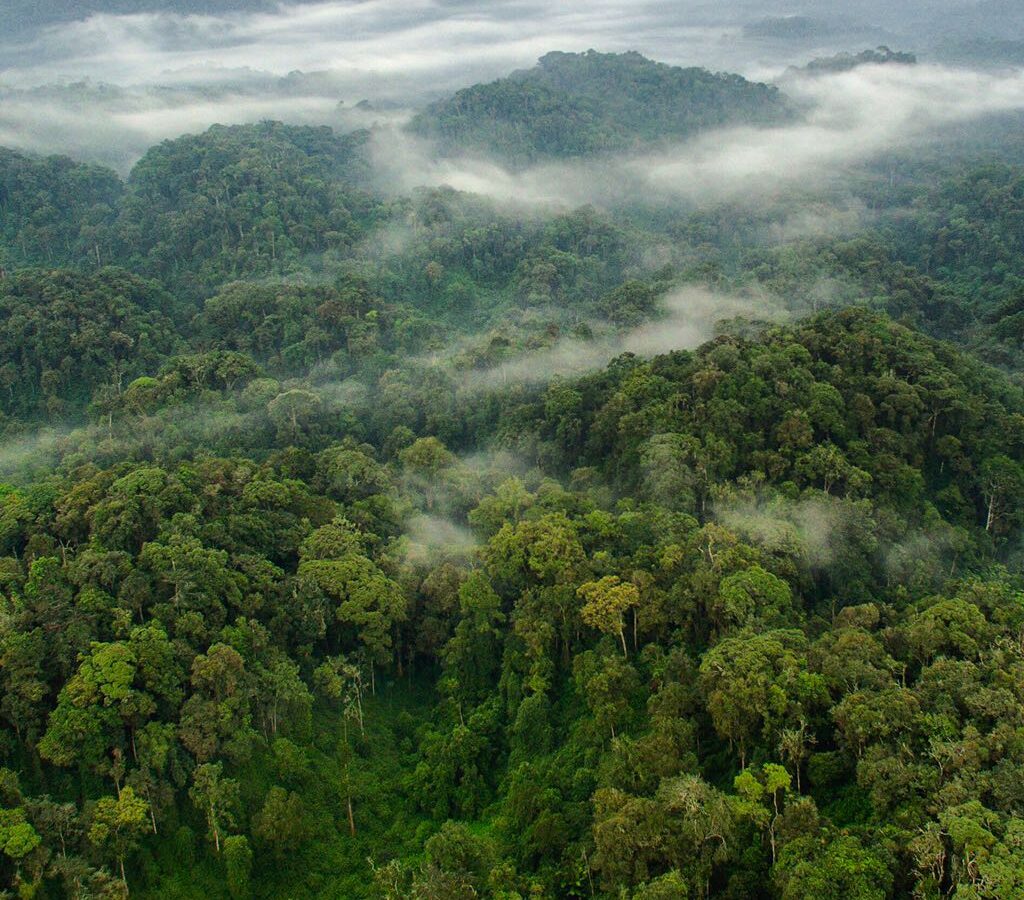
The Nyungwe Canopy Walk is more than a bridge above the trees. It is an invitation to discover an ancient rainforest, understand the importance of conservation, and experience Rwanda from a perspective that traditional savannah safaris cannot offer.
From chimpanzee trekking and waterfalls to ziplining, birdwatching, and forest hiking, Nyungwe offers a rich variety of experiences for travellers seeking adventure and meaningful encounters with nature.
Its conservation history, UNESCO World Heritage recognition, distinctive biodiversity, and growing range of visitor experiences make it a compelling destination for 2026–2027.
The best way to experience Nyungwe is to plan enough time to enjoy it properly. A well-organised two- or three-day itinerary allows you to combine the forest's signature activities while appreciating the journey and the communities around it.
Let Seek Wild Africa help you turn your Nyungwe adventure into a well-planned Rwanda safari.
Explore the rainforest, walk above the canopy, discover its wildlife, and experience the natural beauty of Rwanda.