Volcanoes National Park Gorilla Trekking: Why Rwanda Is One of Africa’s Best Places to Visit in 2026–2027
October 04, 2026Clementine
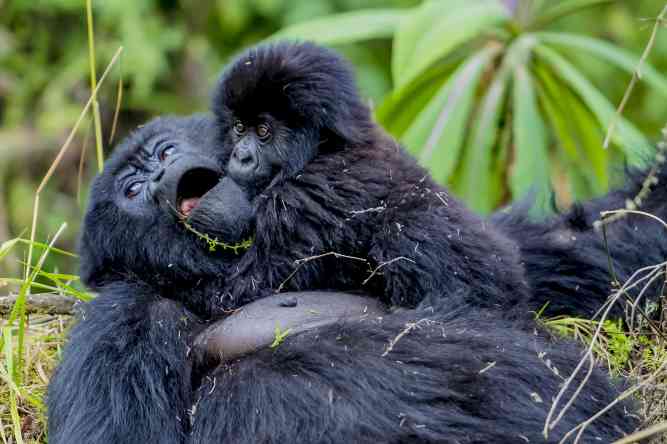
Imagine walking through a mist-covered mountain forest in northern Rwanda.
The ground is damp beneath your hiking boots. Giant bamboo rises around you. The Virunga volcanoes disappear into clouds above the forest. Your ranger suddenly stops.
This is the experience that has made Volcanoes National Park gorilla trekking one of the most sought-after wildlife adventures in Africa.
But the importance of Volcanoes National Park goes far beyond one extraordinary wildlife encounter.
Its story is about an ancient volcanic landscape, decades of scientific research, the survival of mountain gorillas, the resilience of Rwanda's conservation system, carefully managed tourism, community participation and a national commitment to protecting one of the world's most extraordinary species.
For travellers planning a Rwanda safari in 2026 or 2027, Volcanoes National Park offers something that cannot easily be replicated elsewhere.
Why Volcanoes National Park Is One of Africa’s Best Places for Gorilla Trekking
There is no single definition of the “best” national park in Africa.
The continent has extraordinary destinations, but they are famous for different reasons.
The Serengeti is famous for enormous savannah landscapes and the Great Migration.
The Masai Mara is internationally recognised for spectacular wildlife concentrations and its role in the Great Migration ecosystem.
Akagera National Park offers Rwanda's classic savannah safari, including Big Five wildlife, game drives and boat experiences.
Volcanoes National Park is different.
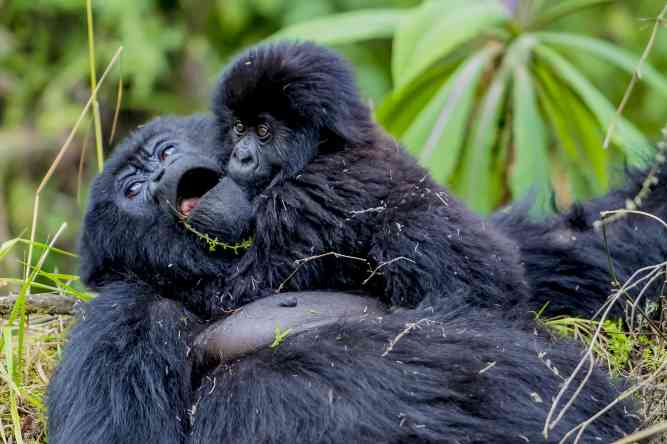
Its greatest strength is the opportunity to enter a high-altitude mountain forest and observe endangered mountain gorillas in their natural habitat under a tightly controlled conservation system.
It combines:
Mountain gorilla trekking
Volcano hiking
Golden monkey trekking

- Montane forest
- Bamboo forest
- Rare biodiversity
- Birdwatching
- Dian Fossey history
- Cultural experiences
- Conservation tourism
- Community involvement
- Luxury and boutique accommodation
- Easy access from Kigali
This combination gives Volcanoes National Park a very distinctive position in African tourism.
Volcanoes National Park at a Glance
- Location: Northern Rwanda, around Musanze and Kinigi
- Main attraction: Mountain gorilla trekking
- Other major experiences: Golden monkey trekking, volcano hiking, Dian Fossey-related experiences, nature walks, cultural experiences and birdwatching
- Highest volcano: Mount Karisimbi, approximately 4,507 metres
- Other volcanoes: Bisoke, Sabinyo, Gahinga and Muhabura
- Main access point: Kinigi
- Distance from Kigali: Approximately three hours by road under normal conditions
- Minimum gorilla trekking age: 15 years
- Current standard international gorilla permit: US$1,500 per person
- Maximum visitors per habituated gorilla group: Eight people per day
Maximum gorilla viewing time: One hour
The official tourism information describes Volcanoes as protecting a mosaic of montane ecosystems and five volcanoes—Karisimbi, Bisoke, Sabinyo, Gahinga and Muhabura. It also identifies gorilla tracking, golden monkeys and hiking among the park's principal experiences.
The History of Volcanoes National Park: From Protection to Global Conservation
A Park Established Nearly a Century Ago
The history of Volcanoes National Park goes back to 1925, when the area was established as a protected area.
At that time, conservation was very different from the highly organised system travellers experience today.
The park has subsequently experienced changes in boundaries, pressures from surrounding human settlement and agriculture, political and social challenges, and enormous conservation difficulties.
The fact that mountain gorillas survived these pressures is itself part of the story.
Rwanda did not inherit a perfect conservation system.
It developed one over decades.
The Dian Fossey Chapter
Any serious history of gorilla conservation in Rwanda must mention Dian Fossey.
In 1967, Fossey established the Karisoke Research Center in the Virunga mountains.
Her work dramatically increased scientific understanding of mountain gorillas and helped bring international attention to the threats facing them.
Karisoke became associated with long-term gorilla research, individual identification, behavioural observation and protection.
Today, visitors can learn more about this history through experiences associated with the Dian Fossey Gorilla Fund and the former research landscape.
The legacy is important because modern gorilla tourism did not appear from nowhere.
It grew from decades of research and conservation.
The Mountain Gorilla Conservation Success Story

From Crisis to Recovery
Mountain gorillas once faced a very uncertain future.
The population in the Virunga Massif suffered from habitat pressure, poaching and other threats.
Rwanda's conservation partners, rangers, researchers, veterinarians, communities and tourism sector gradually developed stronger systems for protecting the species.
Rwanda's official records show the mountain-gorilla population in the Virunga Massif rising from 480 individuals in 2010 to 604 in the 2016 census.
The broader global mountain-gorilla population has also increased substantially compared with historical lows.
That recovery is one of the strongest reasons to view Volcanoes National Park as more than a tourist attraction.
It is a conservation success story.
Conservation Has Continued to Evolve
Kwita Izina: Conservation Becomes a National Celebration
In 2005, Rwanda introduced Kwita Izina, the annual gorilla naming ceremony.
The tradition draws from Rwanda's cultural practice of naming newborn children.
For gorillas, naming became part of a wider conservation strategy.
The event celebrates newborn gorillas, recognises rangers and conservationists, involves communities and communicates the importance of protecting the species to an international audience.
The most recent ceremony, held on 4 September 2026, was the 21st Kwita Izina and saw 22 baby mountain gorillas named.
The 2026 event was held under the theme:
“Conservation is Life: Sustaining the Future.”
This is an important statement about how Rwanda views the future of its gorilla tourism.
Tourism is not supposed to exist separately from conservation.
It is intended to help support it.
Tourism Revenue and Communities
A powerful conservation system needs the support of surrounding communities.
Rwanda's tourism revenue-sharing model channels 10% of tourism revenue from national parks into communities.
This supports projects such as:
- Schools
- Health facilities
- Water infrastructure
- Community development
- Livelihood initiatives
- Human-wildlife coexistence
This creates an important relationship:
Gorillas → Conservation → Tourism → Revenue → Communities → Greater support for conservation
That cycle helps explain why responsible gorilla tourism matters.
When a traveller purchases a gorilla permit, the experience is not simply an expensive wildlife excursion.
It forms part of a larger conservation and community system.
What Makes Volcanoes National Park Unique?
The Landscape
Volcanoes National Park is named after the chain of dormant volcanoes that dominate the landscape.
The mountains include:
Mount Karisimbi
The highest of the five volcanoes at approximately 4,507 metres.
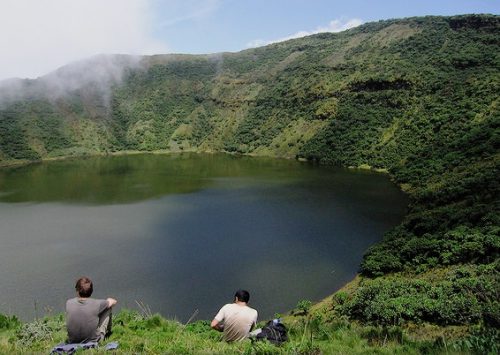
Mount Bisoke
Famous for its crater lake and popular hiking experience.
Mount Muhabura
A striking cone-shaped volcano offering spectacular views.
Mount Gahinga
A beautiful volcanic mountain associated with bamboo and montane landscapes.
Mount Sabinyo
A dramatic mountain whose summit forms part of the Rwanda-Uganda-DRC border area.
Together, these mountains create an extraordinary backdrop for wildlife experiences.
The Gorilla Trekking Experience
What Actually Happens During Gorilla Trekking?
Gorilla trekking begins early in the morning.
Visitors report to the park headquarters in Kinigi for registration, briefing and allocation to a gorilla family.
The process is carefully organised.
The allocation considers factors such as the location of gorilla groups and visitor fitness.
Once the group has been assigned, you travel toward the starting point of the trek.
Then the real adventure begins.
Entering the Forest
The first part of the trek can feel deceptively easy.
You walk through cultivated areas and gradually approach the forest boundary.
Then the environment changes.
The vegetation becomes thicker.
The terrain becomes steeper.
Bamboo and other mountain vegetation surround you.
The guide and trackers continually interpret signs of gorilla movement.
A broken branch.
Fresh vegetation.
Footprints.
Sounds.
Movement in the forest.
The trek is therefore not simply a hike.
It is a wildlife-tracking experience.
Finding the Gorilla Family
The time required to reach a gorilla family can vary significantly.
Some groups may be relatively close.
Others may require several hours of hiking.
Altitude, weather, terrain and the movement of the gorilla family all influence the experience.
That unpredictability is part of what makes gorilla trekking so exciting.
You are not visiting animals in an enclosure.
You are entering their world.
The One Hour With the Gorillas
Once you reach your assigned gorilla family, the most anticipated part of the experience begins.
Visitors are permitted a maximum of one hour with the gorillas.
During that time, you may observe:
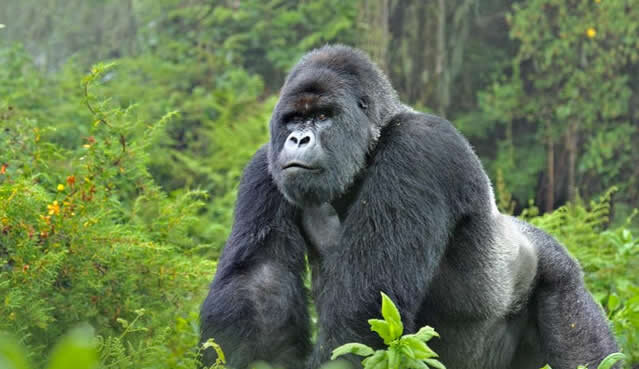
- Silverbacks
- Mothers
- Infants
- Juveniles
- Feeding
- Grooming
- Resting
- Playing
- Social interaction
- Movement through vegetation
The ranger controls the encounter and ensures that visitors follow the conservation rules.
The purpose is not to get as close as possible.
The purpose is to observe the gorillas respectfully while minimising disturbance.
Why the One-Hour Rule Matters
A common traveller question is:
“Why can't I stay longer if I have travelled so far?”
Because the gorillas come first.
Repeated and prolonged human contact could create unnecessary pressure on wildlife.
The limited viewing time helps balance two objectives:
Allow people to experience gorillas
while
Protecting the gorillas from excessive human disturbance.
This is one reason Rwanda's gorilla tourism model is so carefully controlled.
What Does a Gorilla Trekking Permit Include in 2026–2027?
Current Gorilla Permit Price
For international visitors, the standard gorilla trekking permit is currently listed at:
US$1,500 per person per trekking day
The official Rwanda tourism booking information currently lists the US$1,500 rate for gorilla tracking, while special rates exist for Rwandan citizens, East African citizens and qualifying residents.
Because tourism rates and promotional offers can change, travellers planning 2027 should confirm the applicable rate when making their booking.
What the Gorilla Permit Gives You Access To
The permit is fundamentally the authorisation to participate in the regulated mountain-gorilla tracking experience.
It is associated with:
- Access to the gorilla trekking experience
- Park conservation management associated with the trek
- Park ranger/guide support
- Tracking and allocation to a habituated gorilla group
- The regulated gorilla viewing experience
- Up to one hour with the assigned gorilla family
- A controlled group size of up to eight visitors per gorilla group
The park's trackers and guides are part of the experience and help locate and monitor the gorillas.
What the Gorilla Permit Does NOT Normally Include
This is extremely important for first-time travellers.
The US$1,500 permit should not be confused with the price of a complete safari package.
The permit does not automatically mean that the following are included:
- International flights
- Kigali accommodation
- Accommodation in Musanze/Kinigi
- Private 4x4 transport
- Airport transfers
- Meals
- Drinks
- Porter services
- Personal travel insurance
- Visa fees
- Tips
- Personal purchases
- Additional activities
- Accommodation before or after trekking
A professional tour operator can combine the permit with these services into a complete itinerary.
Do You Need a Porter?
Porters are not simply for people who are unable to hike.
They can be extremely useful.
A porter can help carry:
- Backpack
- Water
- Camera equipment
- Rain jacket
- Walking accessories
They can also provide physical assistance on difficult terrain.
Hiring a porter additionally provides direct income to local people.
For many travellers, this is one of the simplest ways to make the trek easier while supporting the local community.
Gorilla Trekking Rules You Must Respect
The gorillas' welfare comes first.
Visitors should:
- Follow ranger instructions
- Maintain the required distance
- Avoid touching gorillas
- Avoid feeding wildlife
- Avoid leaving rubbish
- Avoid loud behaviour
- Follow photography instructions
- Avoid trekking when sick
- Respect the one-hour viewing limit
- Follow all current park health and conservation rules
Rules can be updated, so travellers should always follow the instructions given by park authorities on the day.
Volcanoes National Park vs Serengeti and Masai Mara
Why Volcanoes Does Not Need the Great Migration
The Serengeti and Masai Mara possess one of Africa's greatest wildlife spectacles: the Great Migration.
Millions of herbivores move through the wider Serengeti-Mara ecosystem in a dramatic seasonal cycle.
That is an extraordinary reason to visit.
But comparing Volcanoes National Park to the Serengeti simply by asking:
“Which park has more animals?”
misses the point.
They provide completely different experiences.
Serengeti and Masai Mara
Their strengths include:
- Vast open savannah
- Large herbivore herds
- Lions
- Cheetahs
- Leopards
- Elephants
- Buffalo
- Seasonal migration
- Traditional game drives
- Dramatic predator-prey encounters
Their experience is primarily savannah wildlife viewing.
Volcanoes National Park
Volcanoes offers:
- Mountain gorillas
- Golden monkeys
- Montane rainforest
- Bamboo forest
- Volcano hiking
- Birdwatching
- Conservation experiences
- Cultural experiences
- Dian Fossey history
- Intimate primate encounters
Its experience is primarily mountain rainforest exploration and primate trekking.
Therefore:
Serengeti = Great Migration and open-savana wildlife
Masai Mara = exceptional savannah wildlife and migration ecosystem
Akagera = Rwanda's savannah and Big Five safari
Volcanoes = Rwanda's mountain gorilla and volcanic forest experience
That is what makes the destinations complementary rather than interchangeable.
Volcanoes National Park vs Akagera National Park
This is particularly important for travellers planning a Rwanda safari.
Akagera: Use the Vehicle
Akagera is the place for a traditional game-drive strategy.
You can spend hours exploring savannah and wetland habitats in search of:
- Lions
- Elephants
- Rhinos
- Buffalo
- Leopards
- Giraffes
- Zebras
- Antelope
- Hippos
- Crocodiles
- Numerous bird species
You can also add a boat safari on Lake Ihema.
Volcanoes: Leave the Vehicle
At Volcanoes, the vehicle is primarily a transport tool, not the main wildlife-viewing platform.
You use the vehicle to reach:
- Park headquarters
- Trekking starting points
- Hiking areas
- Cultural experiences
- Accommodation
- Other attractions
Then you explore the mountain environment on foot.
That is why a good Rwanda itinerary should not try to turn Volcanoes into another Akagera.
Instead:
Akagera → game drive
Volcanoes → trekking
Nyungwe → rainforest exploration
This is the best way to experience Rwanda's different ecosystems.
Game-Drive Strategy for a Rwanda Safari
If your trip includes both Akagera and Volcanoes, organise your wildlife strategy around the strengths of each park.
Day in Akagera
Use a 4x4 safari vehicle.
Start early.
Focus on wildlife tracking.
Add a boat safari if your schedule allows.
Days in Volcanoes
Leave the vehicle behind for the major experience.
Prepare for hiking.
Focus on:
- Gorilla trekking
- Golden monkey trekking
- Volcano hiking
- Forest exploration
This gives you a much more diverse safari than spending every day inside a vehicle.
What Can You Do in Volcanoes National Park Besides Gorilla Trekking?
Gorillas are the headline.
But they are not the only reason to visit.
1. Golden Monkey Trekking
The golden monkey is one of the most fascinating primates of the Virunga landscape.
These energetic monkeys move rapidly through bamboo vegetation.
Unlike the slower, more deliberate gorilla experience, golden monkey tracking can be fast and playful.
It is an excellent second primate experience.
2. Mount Bisoke Hiking
Mount Bisoke offers one of the most popular volcanic hiking experiences in the region.
The summit features a crater lake.
The climb is demanding but rewarding.
Along the way, you experience:
- Mountain vegetation
- Bamboo forest
- Highland landscapes
- Volcano scenery
- Changing weather
- Panoramic views
It is particularly suitable for travellers who want to combine gorilla trekking with adventure.
3. Mount Muhabura
Muhabura is another spectacular volcanic hiking option.
The mountain rises to approximately 4,127 metres.
The hike is physically demanding but offers exceptional mountain scenery.
For adventurous travellers, combining:
Gorilla Trekking + Muhabura Hiking
can create an extraordinary Rwanda mountain itinerary.
4. Mount Karisimbi
Karisimbi is the highest of Rwanda's five volcanoes.
At approximately 4,507 metres, it is a serious mountain challenge.
It is better suited to travellers specifically interested in high-altitude hiking and who have adequate physical preparation.
5. Mount Gahinga and Mount Sabinyo
These mountains provide additional opportunities for volcanic hiking and exploration.
Each mountain has a different character.
That means returning to Volcanoes does not necessarily mean repeating the same experience.
6. Dian Fossey Experience
For travellers interested in conservation history, visiting the Dian Fossey-related sites is extremely meaningful.
It allows you to understand the scientific history behind modern gorilla conservation.
Instead of simply seeing gorillas, you learn about the people who dedicated their lives to understanding and protecting them.
7. Buhanga Eco-Park
Buhanga is an ancient forest associated with Rwandan cultural history and traditional beliefs.
It provides a different perspective on Rwanda's relationship with forests.
8. Musanze Caves
The Musanze Caves offer another experience outside the gorilla trek.
The caves were formed through volcanic processes and provide an opportunity to explore the geological history of the region.
9. Cultural Experiences
A good Volcanoes itinerary should not be only:
Hotel → Gorilla → Hotel
Consider adding a community or cultural experience.
This can introduce travellers to:
- Traditional dance
- Local stories
- Crafts
- Agriculture
- Food
- Community life
- Conservation relationships
This makes the trip more meaningful.
A One-Day Gorilla Trekking Tour from Kigali
Is a One-Day Gorilla Trek Possible?
Yes.
Volcanoes National Park is close enough to Kigali for a same-day gorilla trekking experience.
However, it is an extremely early and long day.
The official tourism itinerary indicates that the drive from Kigali to Volcanoes is roughly three hours under normal conditions.
For a same-day trip, timing must be carefully managed.
03:00–03:30 – Pick-Up in Kigali
Your professional driver-guide collects you from your hotel.
Depart Kigali before sunrise.
03:30–06:30 – Drive to Kinigi
Travel north through Rwanda's beautiful countryside toward Musanze.
A packed breakfast can be arranged.
07:00 – Gorilla Trekking Briefing
Arrive at the park headquarters.
Register and receive the briefing.
You will be allocated a gorilla family according to the park's operational system.
Morning – Begin the Trek
Drive to the appropriate trailhead.
Start hiking through the forest.
Gorilla Encounter
Once you find your assigned family, spend up to one hour observing them.
Afternoon – Return from the Forest
Walk back to the starting point.
Meet your driver.
Lunch
Enjoy lunch in the Musanze/Kinigi area.
Afternoon – Return to Kigali
Begin the journey back to Kigali.
Evening – Arrival in Kigali
Arrive in Kigali later in the day.
Is This the Best Option?
It works well for travellers with very limited time.
But it is not our preferred option for everyone.
A two-day itinerary provides a much more relaxed experience.
Beautiful 2-Day Gorilla Trekking Itinerary from Kigali
Day 1: Kigali – Volcanoes National Park
Morning
Your Seek Wild Africa professional driver-guide picks you up from Kigali.
Travel north toward Musanze.
The journey takes you through Rwanda's famous rolling landscapes.
Midday
Arrive around Musanze/Kinigi.
Enjoy lunch.
Afternoon
Choose an additional activity depending on your interests and timing:
- Cultural experience
- Gorilla Guardians experience
- Dian Fossey-related experience
- Musanze area exploration
- Twin Lakes scenery
Evening
Check into your lodge.
Your guide helps you prepare for the following morning.
Prepare:
- Hiking boots
- Rain jacket
- Long trousers
- Gloves
- Water bottle
- Camera
- Small backpack
Enjoy dinner and rest early.
Day 2: Gorilla Trekking – Return to Kigali
Early Morning
Wake early.
Have breakfast.
Proceed to the park headquarters.
07:00 – Briefing
Receive instructions from park officials.
Meet your ranger and trekking team.
Morning – Gorilla Trek
Enter the forest.
Follow the trackers.
The trek may take a short time or several hours depending on the location of your gorilla family.
Gorilla Encounter
Spend up to one hour with the gorillas.
Observe them respectfully.
Photograph them according to ranger instructions.
Afternoon
Return from the forest.
Have lunch.
Afternoon/Evening
Begin the drive back to Kigali.
Arrive in Kigali later in the day.
Why This Two-Day Option Is Better
You avoid travelling to and from Kigali on the same day as the entire trekking experience.
You have more time to rest.
You also have an opportunity to experience Musanze rather than seeing the area only through a car window.
Recommended 4-Day Volcanoes National Park Adventure from Kigali
For travellers who want to understand the destination rather than simply “tick off” gorilla trekking, four days can be much more rewarding.
Day 1: Kigali – Musanze – Volcanoes National Park
Morning
Pick-up from Kigali.
Drive toward Musanze.
Afternoon
Arrive in the Volcanoes region.
Enjoy lunch.
Visit a cultural or conservation-related attraction.
Evening
Check into your lodge.
Relax with views of the Virunga volcanoes.
Day 2: Gorilla Trekking
This is the main wildlife day.
Early Morning
Breakfast.
Transfer to Kinigi headquarters.
07:00
Briefing and gorilla-family allocation.
Morning
Enter the forest.
Track your assigned gorilla family.
Gorilla Encounter
Spend up to one hour with the family.
Afternoon
Return to the lodge.
Lunch.
Relax.
Evening
Enjoy a quiet evening surrounded by the volcano landscape.
Day 3: Golden Monkeys or Volcano Hiking
Choose according to fitness and interests.
Option A: Golden Monkey Trekking
Track golden monkeys through the bamboo forest.
This is a fantastic complement to gorilla trekking.
Option B: Mount Bisoke Hiking
For physically active travellers, undertake the Mount Bisoke hike.
Enjoy volcanic scenery and the crater-lake environment.
Option C: Dian Fossey and Conservation Experience
For travellers interested in conservation history, explore the story of Dian Fossey and modern gorilla protection.
Return to your lodge in the afternoon or evening.
Day 4: Volcanoes – Cultural Experience – Kigali
Enjoy a relaxed breakfast.
Depending on departure time, visit a cultural attraction or community experience.
Continue toward Kigali.
Stop for photography along the way.
Arrive in Kigali.
Why Four Days Works So Well
You experience:
Gorillas + Primates + Mountains + Conservation + Culture
instead of:
Gorillas only.
Where Should You Stay During a Volcanoes Gorilla Safari?
One important distinction is necessary.
Most of the famous lodges associated with gorilla trekking are near the park and in the surrounding Kinigi/Musanze area rather than being conventional lodges physically located deep inside the protected park.
This is actually advantageous because it provides easy access to the park headquarters while preserving the protected mountain habitat.
Luxury Accommodation
Bisate Lodge
Bisate is one of the best-known luxury conservation lodges near Volcanoes National Park.
It is particularly attractive to travellers looking for:
- Luxury
- Privacy
- Exceptional design
- Conservation experiences
- High-end service
- Romantic travel
Singita Kwitonda Lodge
Singita Kwitonda is another exceptional luxury option near the park boundary.
It combines luxury accommodation with strong conservation positioning and spectacular volcano views.
Sabyinyo Silverback Lodge
Sabyinyo Silverback Lodge is close to the park headquarters and offers private cottages, gardens and mountain views.
It is particularly convenient for travellers prioritising access to gorilla trekking.
Virunga Lodge
Virunga Lodge sits on a hillside with dramatic views toward the volcanoes and surrounding lakes.
It is an excellent option for travellers who want:
Mountain views + comfortable accommodation + atmosphere.
Amakoro Songa Lodge
Amakoro Songa provides another boutique option in the Volcanoes region, with views toward the mountains and comfortable ensuite accommodation.
Choosing the Right Accommodation
Your accommodation choice should depend on:
Budget + comfort + location + experience + safari style.
For honeymooners:
Luxury lodge
For photographers:
Mountain-view property
For adventure travellers:
Comfortable lodge close to trekking activities
For budget-conscious travellers:
Mid-range guesthouse/lodge around Musanze
Seek Wild Africa can help match accommodation to your safari budget and priorities.
When Is the Best Time for Gorilla Trekking?
Volcanoes National Park can be visited throughout the year.
Because it is a mountain rainforest, weather can change quickly.
Rain is possible even during periods traditionally considered drier.
The most important preparation is therefore not simply choosing a “perfect” month.
It is preparing for:
- Rain
- Mud
- Steep terrain
- Cold temperatures
- High altitude
- Wet vegetation
- Long hiking periods
A traveller who prepares correctly can enjoy the experience regardless of changing mountain conditions.
What Should You Bring for Gorilla Trekking?
Clothing
Bring:
- Long trousers
- Long-sleeved shirt
- Waterproof jacket
- Warm layer
- Sturdy hiking boots
- Extra socks
- Gaiters
- Gardening or leather gloves
- Hat
Equipment
Bring:
- Reusable water bottle
- Small backpack
- Camera
- Extra batteries
- Binoculars
- Waterproof camera protection
- Walking poles if desired
Personal Items
Bring:
- Sunscreen
- Insect repellent
- Personal medication
- Hand sanitiser
- Small snacks where permitted
- Travel documents
- Travel insurance information
Rwanda's Plastic-Free Policy: What Water Bottle Should You Bring?
Rwanda has had a national ban on plastic bags since 2008, and Visit Rwanda advises visitors not to bring plastic bags into the country.
Rwanda also prohibits various single-use plastic items.
Therefore, travellers should prepare for a plastic-conscious safari.
Instead of carrying disposable plastic bags or relying heavily on single-use plastic packaging, bring a durable reusable bottle.
Recommended Water Bottles
Stainless-Steel Reusable Bottle
Durable and excellent for safari travel.
BPA-Free Reusable Hard Bottle
Lightweight and practical.
Insulated Reusable Bottle
Useful for keeping water cool during long journeys.
A good practical choice is a 750 ml–1 litre reusable bottle, and travellers who drink a lot of water can carry two reusable bottles.
Your tour operator can also advise you about the water arrangements for your particular itinerary.
The important rule is simple:
Travel with reusable equipment and leave unnecessary single-use plastic behind.
How Seek Wild Africa Prepares Your Gorilla Trekking Experience
A gorilla safari involves more than buying a permit.
The permit is only one part of the journey.
At Seek Wild Africa, we help travellers organise the complete experience.
Gorilla Permit Planning
We assist with:
- Permit arrangements
- Date coordination
- Traveller details
- Trekking logistics
- Itinerary planning
Because gorilla permits are limited, advance planning is strongly recommended.
Private 4x4 Transport
We organise reliable transport from:
- Kigali
- Kigali International Airport
- Hotels
- Volcanoes National Park
- Musanze
- Other Rwanda destinations
A professional driver-guide helps make the long journey comfortable and efficient.
Accommodation
We can help select accommodation based on:
- Budget
- Luxury level
- Location
- Number of travellers
- Honeymoon requirements
- Family requirements
- Trekking schedule
Complete Rwanda Safari Combinations
We can combine Volcanoes National Park with:
Akagera National Park
For Big Five wildlife and game drives.
Nyungwe National Park
For chimpanzee trekking, canopy experiences, waterfalls and rainforest exploration.
Kigali
For culture, history and city experiences.
Lake Kivu
For relaxation, boat trips and lakeside experiences.
This allows travellers to experience several completely different sides of Rwanda.
Why Book a Professional Tour Operator?
Gorilla trekking involves precise timing.
You need to coordinate:
Permit + Transport + Accommodation + Park Reporting + Trekking + Meals + Additional Activities + Return Journey
A small mistake in timing can create unnecessary stress.
A professional operator helps turn these individual pieces into one coordinated journey.
That is where Seek Wild Africa adds value.
Why Volcanoes National Park Is More Than a Gorilla Destination
The most powerful way to understand Volcanoes is to stop thinking of it as:
“the place where I see gorillas.”
Think of it as:
A living mountain conservation landscape.
You have:
Volcanoes
↓
Rainforest
↓
Gorillas
↓
Golden monkeys
↓
Birds
↓
Conservation
↓
Research
↓
Communities
↓
Tourism
↓
Sustainable development
This is what makes the destination powerful.
The Real Reason Volcanoes Can Compete With Africa's Most Famous Parks
Volcanoes does not need the Great Migration.
It has something else.
A traveller can watch thousands of wildebeest crossing a river in the Serengeti.
That is extraordinary.
Another traveller can watch predators following migrating herds in the Masai Mara.
That is extraordinary.
Another traveller can watch elephants, lions and rhinos during a game drive in Akagera.
That is extraordinary.
But in Volcanoes, a traveller can walk through a high-altitude rainforest and sit quietly in the presence of a wild mountain-gorilla family.
That is an entirely different kind of extraordinary.
The value of an African national park should not be measured only by the number of animals it contains.
It should also be measured by:
rarity + conservation importance + wildlife experience + landscape + accessibility + organisation + visitor management + cultural significance.
By these measures, Volcanoes National Park has a very strong claim to being one of Africa's outstanding wildlife destinations.
Final Verdict: Is Volcanoes National Park One of the Best National Parks in Africa?
For gorilla trekking, absolutely—it belongs among Africa's most remarkable wildlife destinations.
Its strength is not the Great Migration.
Its strength is not traditional game drives.
Its strength is the combination of:
Mountain gorillas
Ancient montane forest
Five volcanic peaks
Golden monkeys
Scientific research
Dian Fossey's legacy
Strong conservation systems
Community participation
Controlled tourism
High-quality accommodation
Easy access from Kigali
And an extraordinary personal wildlife encounter.
The story becomes even more powerful when you consider where the gorillas came from historically and where conservation is taking them today.
A species once facing severe threats has become a symbol of Rwanda's conservation ambition.
That is why visiting Volcanoes National Park in 2026–2027 is not simply about taking a photograph of a gorilla.
It is about witnessing the result of decades of protection, research, community participation and conservation investment.
And for the traveller, it becomes one of those rare journeys where the destination changes the way you think about wildlife.
Plan Your Volcanoes National Park Gorilla Safari With Seek Wild Africa
Whether you have only one day for a fast gorilla experience from Kigali, two days for a focused gorilla trekking adventure, or four days to combine gorillas, golden monkeys, volcano hiking and cultural experiences, Seek Wild Africa can organise your Rwanda journey around your interests, time and budget.
We can help organise:
- Gorilla trekking permits
- Professional driver-guides
- Private 4x4 transport
- Airport transfers
- Accommodation
- Gorilla trekking logistics
- Golden monkey trekking
- Volcano hiking
- Dian Fossey experiences
- Cultural experiences
- Kigali tours
- Akagera safaris
- Nyungwe chimpanzee trekking
- Lake Kivu experiences
- Multi-day Rwanda safari packages
The goal is simple:
You focus on experiencing Rwanda. We take care of the logistics.
Your Gorilla Adventure Starts in Kigali
From the first morning departure in Kigali to the moment you stand quietly in the forest with a mountain-gorilla family, every part of the journey matters.
Explore Volcanoes National Park with Seek Wild Africa and experience one of Africa's most extraordinary conservation and wildlife destinations in 2